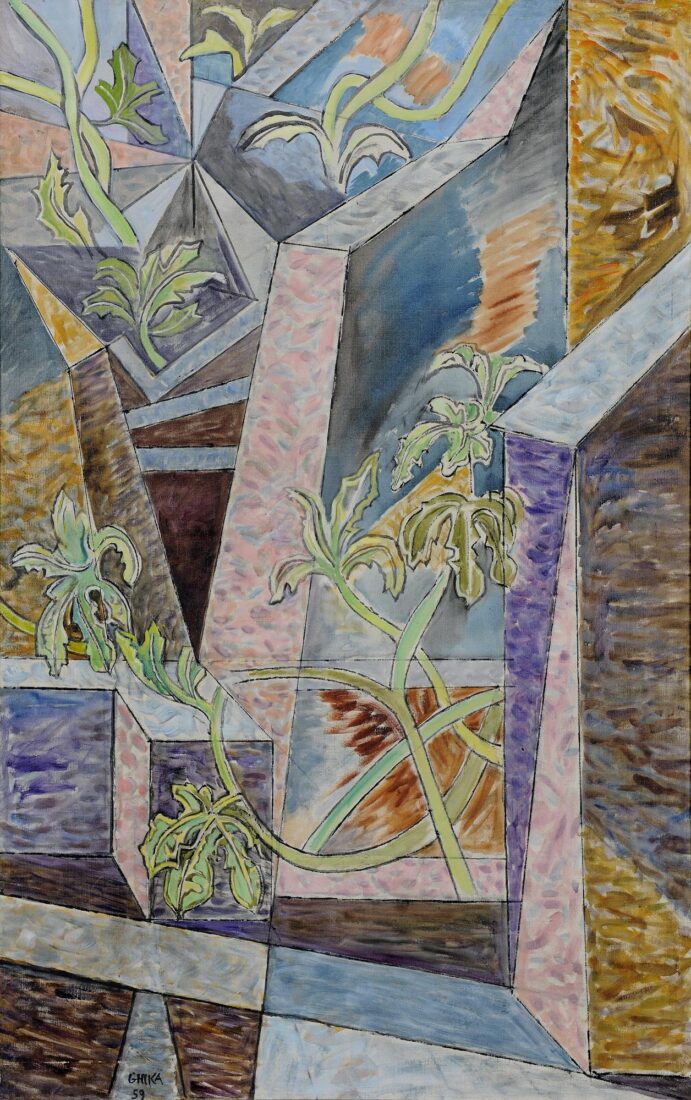
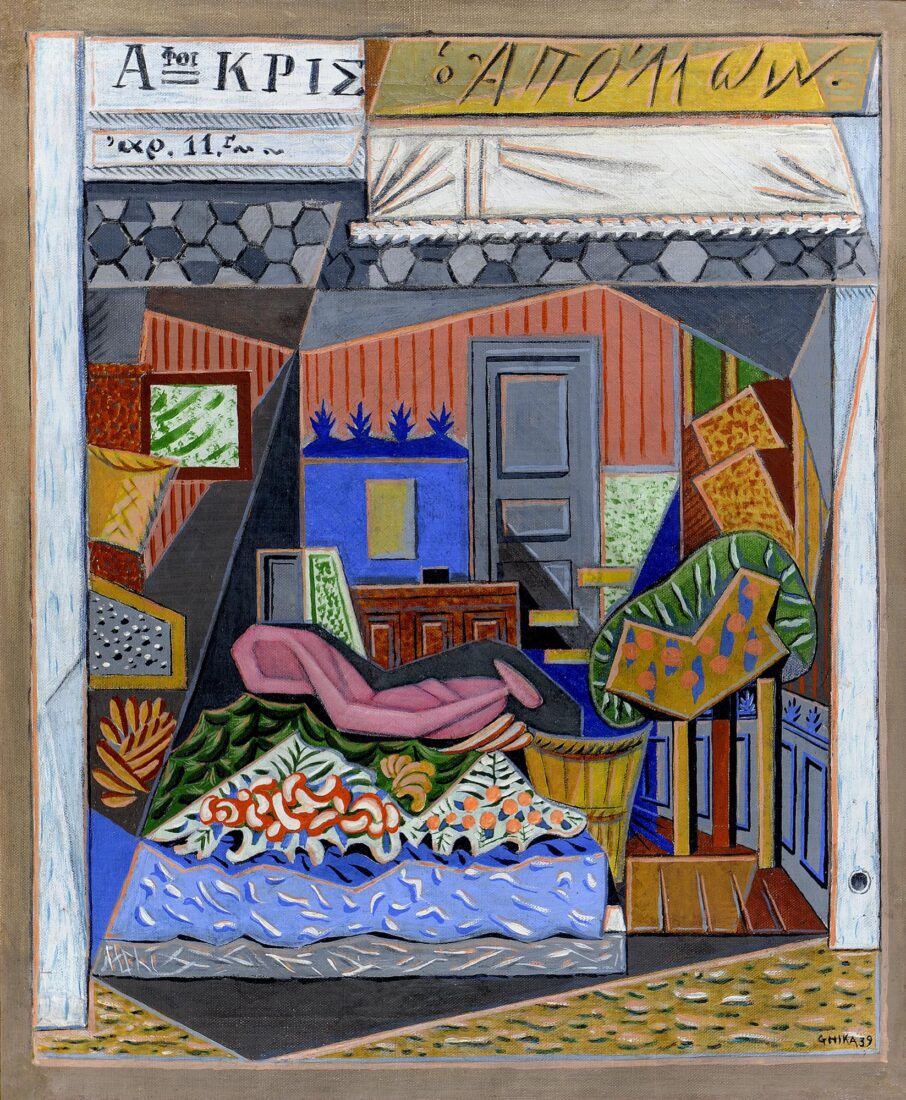
Apollon Grocery Store” helps us understand Ghika’s post-cubist idiom. Carefully reading the painting, one realises that it depicts recognizable objects: a store, its name indicated by a sign. Underneath a white awning are seen the facade and the door. Fruit boxes are arrayed in front; there are various vegetables and plants. So, what is new about this painting? Well, that the artist fragments, refracts the surface — as if we were looking at a grocery store through the pieces of a broken mirror — and depicts a different subject in each piece, in a simple, decorative fashion. The painting thus becomes rather like a puzzle. Chatzikyriakos-Ghika loves vivid colours and multiform shapes, and, accordingly, his paintings convey an effect of elan vital and optimism.
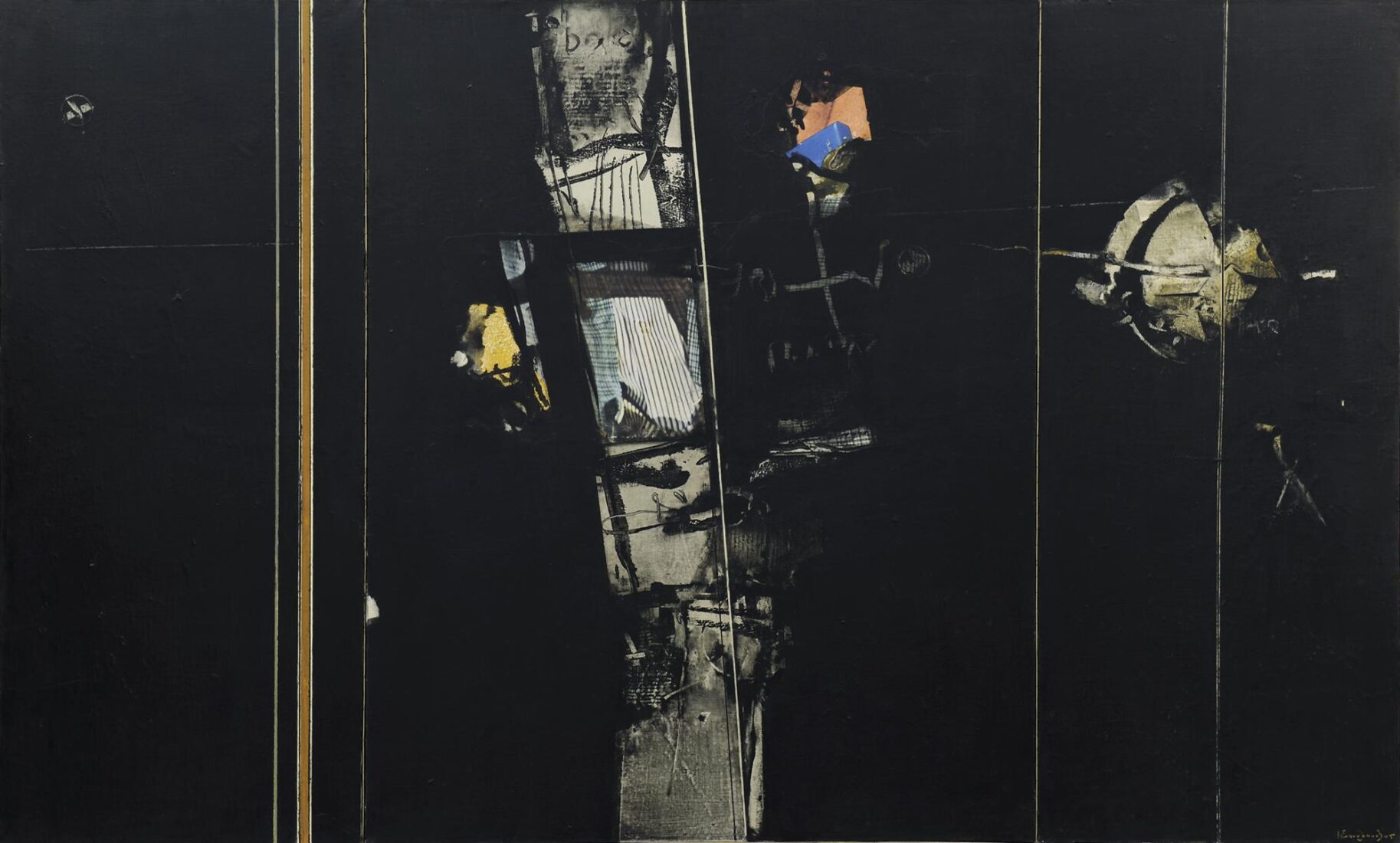
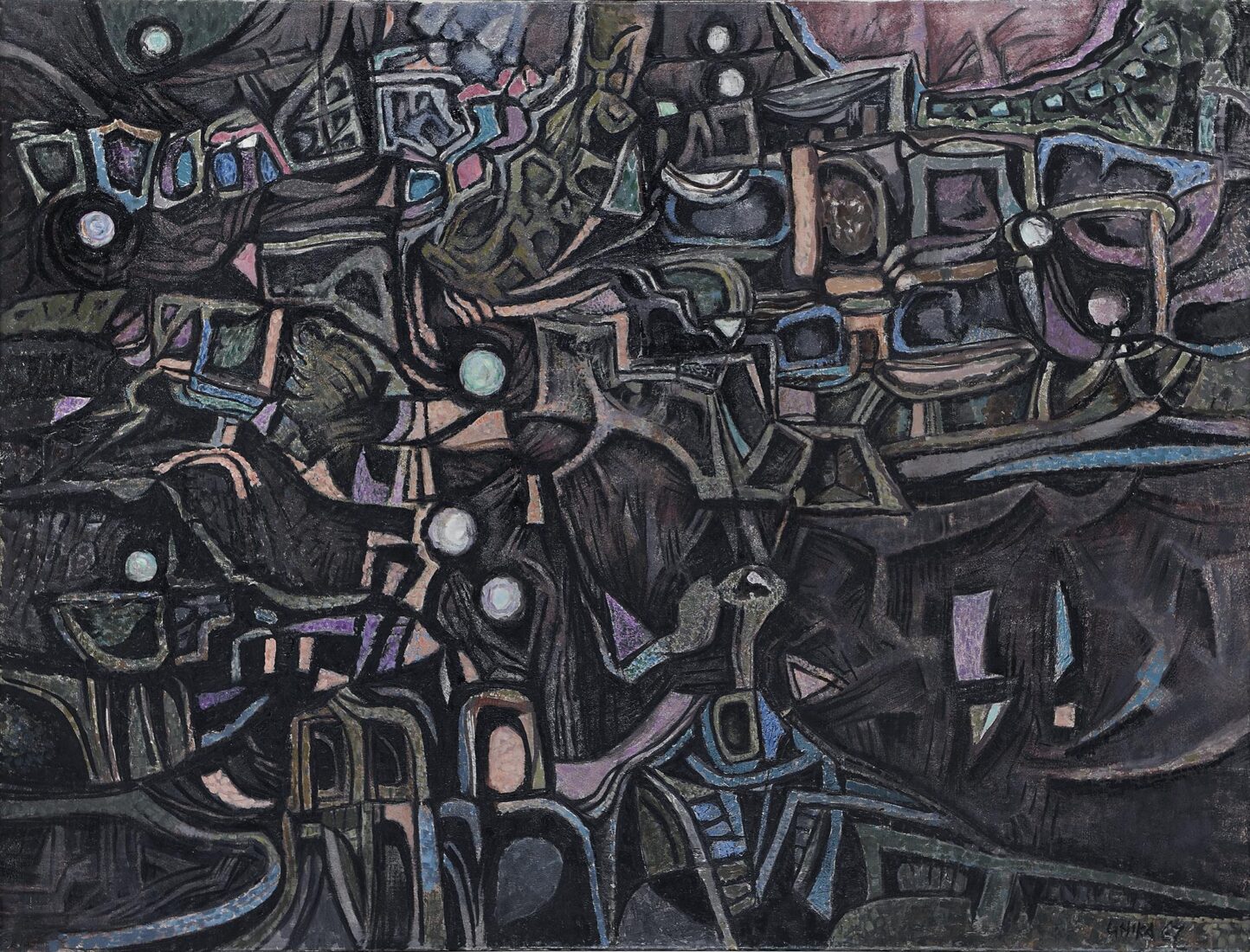
Yannis Spyropoulos is a major representative of non-figurative art in Greece. Triptych V is a composition of monumental proportions that represents the final, most mature period of his abstract painting in which the black ground prevailed. This style could be called painting with well-lit darkness. Luminous incidents dominated by white, greys or bright colors emerge from the dark ground of the painting, like testimonies of a life that passed and left its traces on the canvas. These relics occasionally resemble fabric, mysterious symbols, or fragments of writing. Spyropoulos works the surface like a palimpsest with layers and disclosures that intensify its imposing magic. All this poetic painterly process obeys strict rules. Although he frequently uses collage or scraping to remove the paint, the final outcome appears highly refined as though not by hand. The organization of the composition with its strong, slightly slanted verticals is classical. The straight white lines, engraved according to cannon, underline the two dimensions of the picture, removing the sense of depth imposed by the various incidents. The assertion of the two-dimensionality of the picture plane was a constant pursuit of modern art.
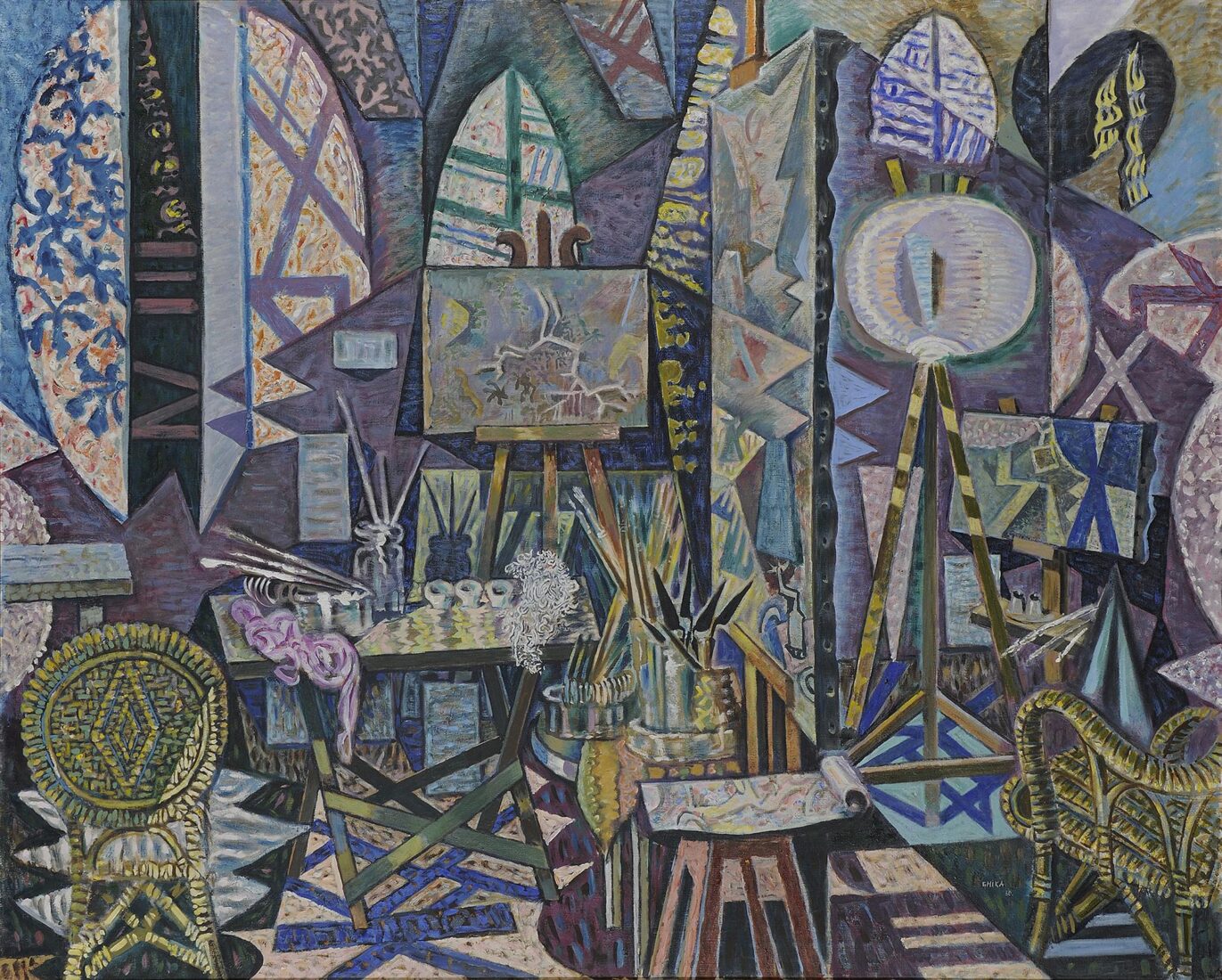
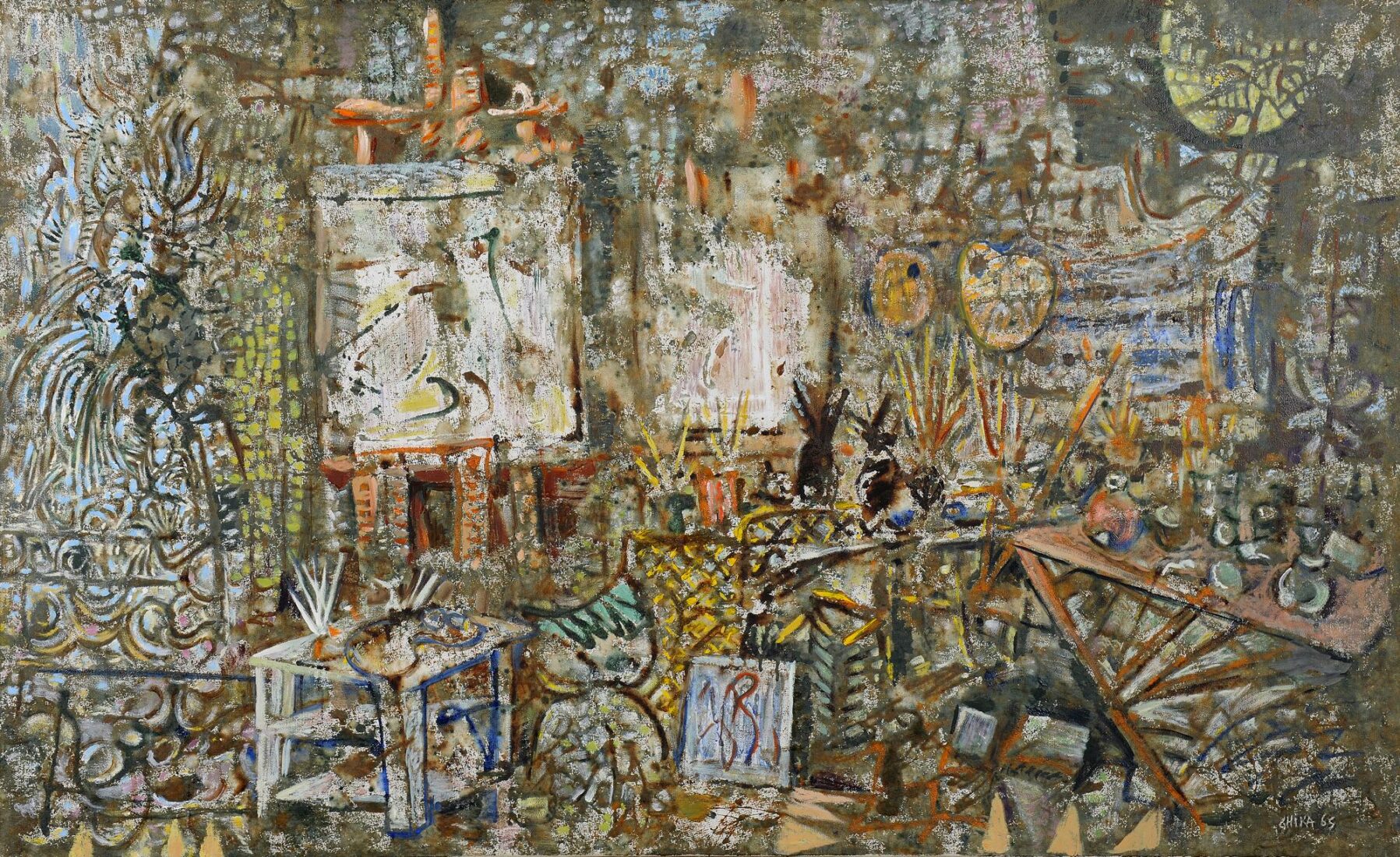
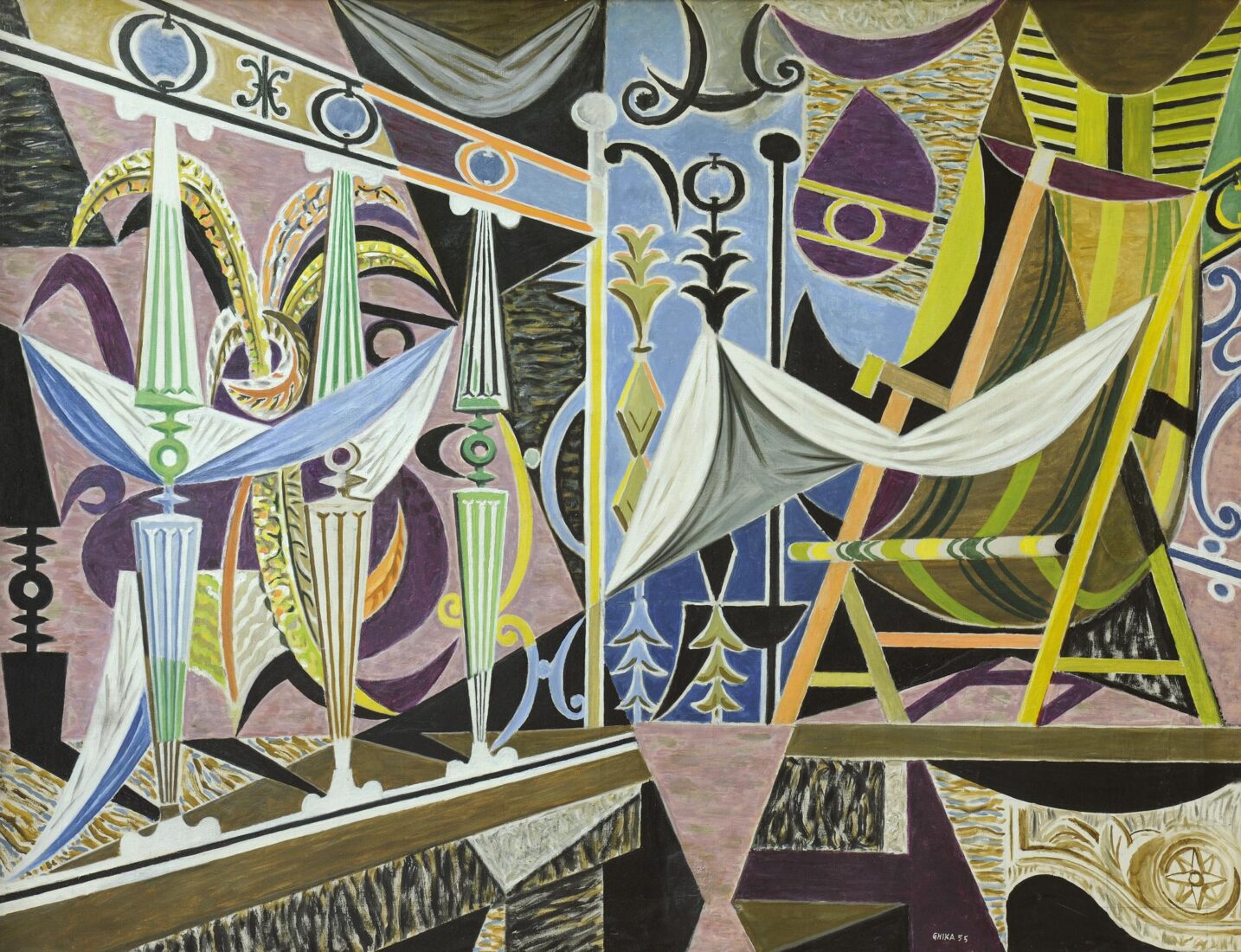
Made in our familiar Ghika’s post-cubist style, this fascinating painting introduces us to the artist’s world, his studio. Looking closely at this densely structured puzzle, one gradually makes out several pieces of furniture and other objects that seem lost in a kaleidoscope of colours. It is not difficult to locate a folding table with brushes and other painting tools, easels with characteristic paintings on them, the straw chair and easy chair, a stool on which a papyrus roll is unfolding like a Chinese painting, while arched windows open in the background. There is no void anywhere. The entire surface is densely woven like a tapestry. Instead of being painted with unified, solid paint, each “tessera” in this colourful puzzle is moulded according to Cezanne’s system, that is, in constantly changing tones. Nevertheless, there is a dominant colour for each surface. Purple, sky blue, green prevail. In this studio series, Ghika is inspired by a similar series of works, made by Picasso a few years before, when he had purchased the Villa California in Cannes. His paintings are also entitled “Studios.