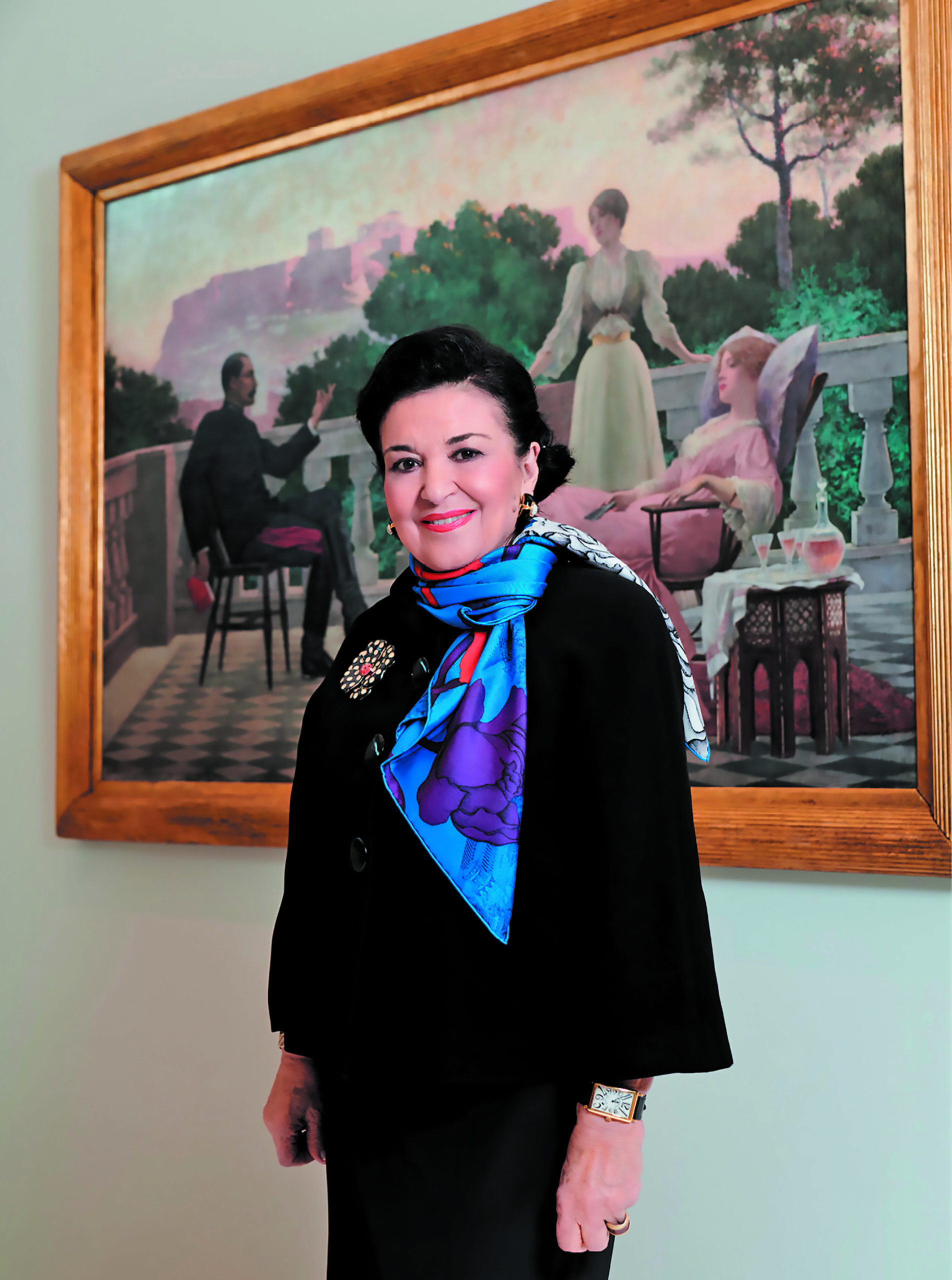
1834 – 1897. The historical background to the founding of the National Gallery
The care for creating art collections is almost as old as the independent Greek state, expressing the Greeks’ desire to see the arts reborn in their ancient cradle. The law “On scientific and technological collections, on the discovery and preservation of antiquities and their use” in 1834 provided for the establishment of an Art Gallery for the first time. In 1836, Leo von Klenze, the architect of Ludwig I of Bavaria, drew up plans for the construction of a complex museum, the Pantechnion, which would house collections of paintings, drawings, and engravings, as well as a School of Fine Arts. However, these plans were never realized.
The first attempt to create an art collection to be housed in the Pantechnion took place in 1841 by the director of the Polytechnic School (National Technical University) Friedrich Zentner. Zentner transferred all the artworks assembled at the Ministry of the Interior to the Polytechnic, where those collected in Aegina by Ioannis Kapodistrias, first Governor of the modern Greek state, had already been relocated. In 1878 the first Art Gallery opened to the public, featuring a collection of 117 paintings, primarily by foreign artists. Forty-four of these came from the University’s collection – part of which was an 1865 donation by the writer and scholar Stefanos Xenos (1821-1894) – while the rest belonged to the old gallery of the School of Arts, established in 1837, and also originated from donations. However, this initiative, although welcomed enthusiastically, did not lead to any further action.
In 1892, the Minister of Ecclesiastical Affairs and Public Education, Konstantinos Papamichalopoulos, based on the law of 1834, established a committee to investigate the conditions and prepare for the founding of a public Art Gallery. In 1893, the new Minister of Ecclesiastical Affairs and Public Education, Athanassios Eftaxias, introduced a bill to Parliament for the foundation of an art museum, but it failed to pass.
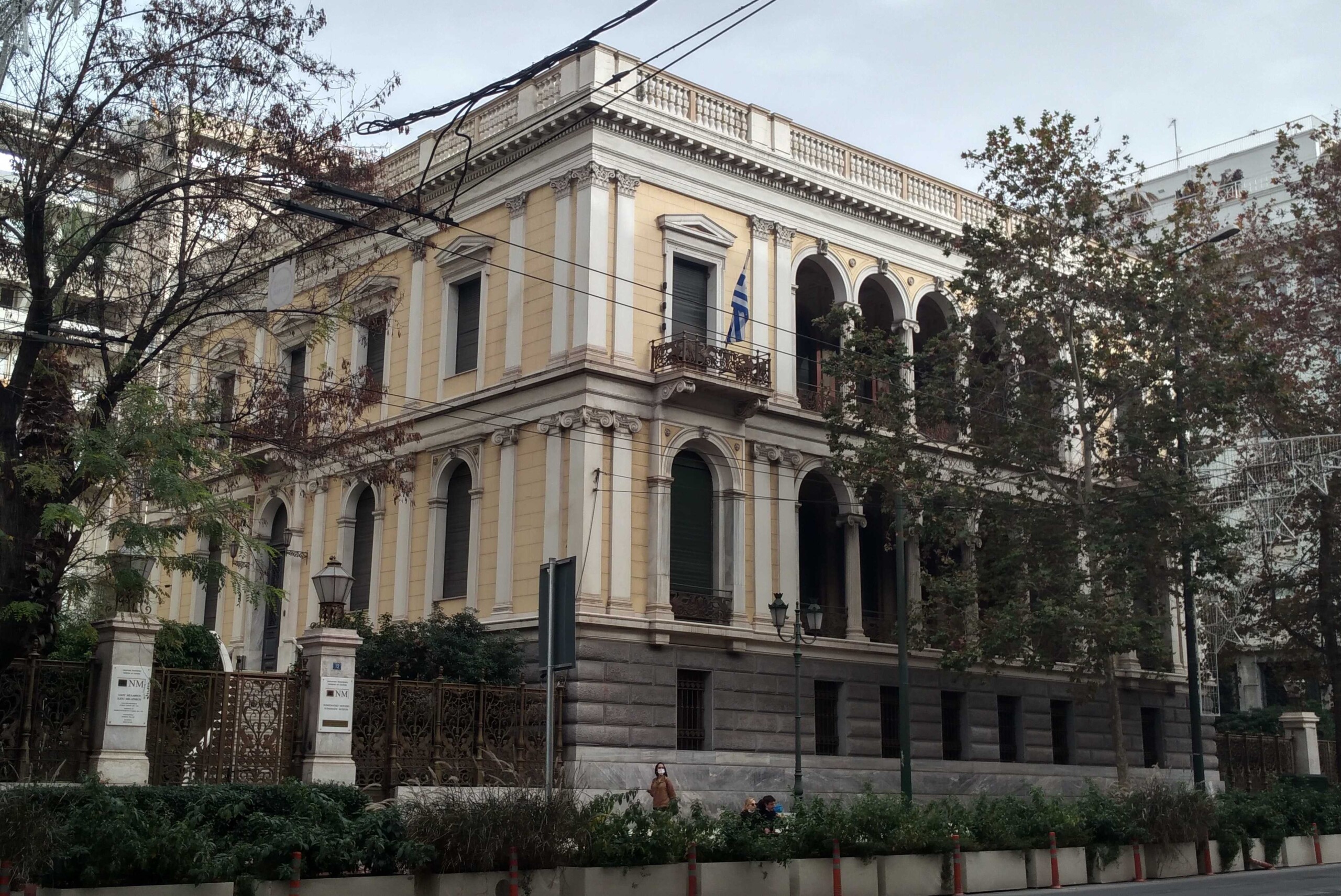
In 1895, the will of Alexandros Soutsos (1839-1895) – a jurist, art lover, and founding member of the Society of the Friends of the People – was published. In it, the testator bequeathed his estate to the Greek state for the purpose of establishing and maintaining a Museum of Painting, under the name “Alexandros Soutsos Museum”. The museum was to be housed in his home on Filellinon Street and, with his collection forming the nucleus, it would include “…original works of various schools by painters who had died at least thirty years prior, and original drawings (dessins) […] a numismatic collection based on the one left by my father […] a library based on my own […] various works of art (objets d’art), Byzantine, Medieval, and Renaissance.”
In 1897, Athanassios Eftaxias, submitted a draft decree to King George I for the establishment of a Museum of Fine Arts. Based on this draft, a royal decree was published on September 18, 1897, ordering the establishment of a “Museum of Fine Arts”, with its temporary headquarters at the Sinaean Academy. This laid the foundations for the establishment of the first state Art Gallery in Greece and the wider region of the Balkans and the Eastern Mediterranean. According to the decree, the Museum would house: “a) works of Byzantine and Christian art from early Christian times, especially frescoes currently stored in the National Museum or scattered throughout the State, b) copies, engravings, and any depictions of the prominent painters of the West, c) paintings by foreign artists and Greeks of recognized fame in Europe. Sculptural works from early Christian times are also to be deposited in this Museum.”
The supervision of the museum was to be held by a Supervisor and a six-member Committee, whose duties were also defined. The Committee would consist of the Director of the School of Fine Arts (serving as the director of the School of Industrial Arts) as president, the General Supervisor of Antiquities and Museums, the Supervisor of the Museum of Fine Arts, and four other members, at least two of whom had to be prominent artists, either active or former professors of the School of Fine Arts. Furthermore, eminent Greek artists living abroad could, by decision of the Minister, be appointed as corresponding or – the most distinguished – honorary members of the Committee. The Committee’s mandate included the provision for acquiring works to enrich the collections, alongside deciding on acquisitions and the acceptance of proposed donations, subject to Ministry approval.
The nucleus of the collections would consist of works belonging to the government and public institutions that the Committee deemed significant, as well as Byzantine frescoes that could be detached, while in the future, the museum could be enriched through purchases and donations.
The museum envisioned by Athanassios Eftaxias never materialized, since the 1897 decree was superseded by the decree of June 28, 1900, “On the regulation of the Art Gallery in Athens”.
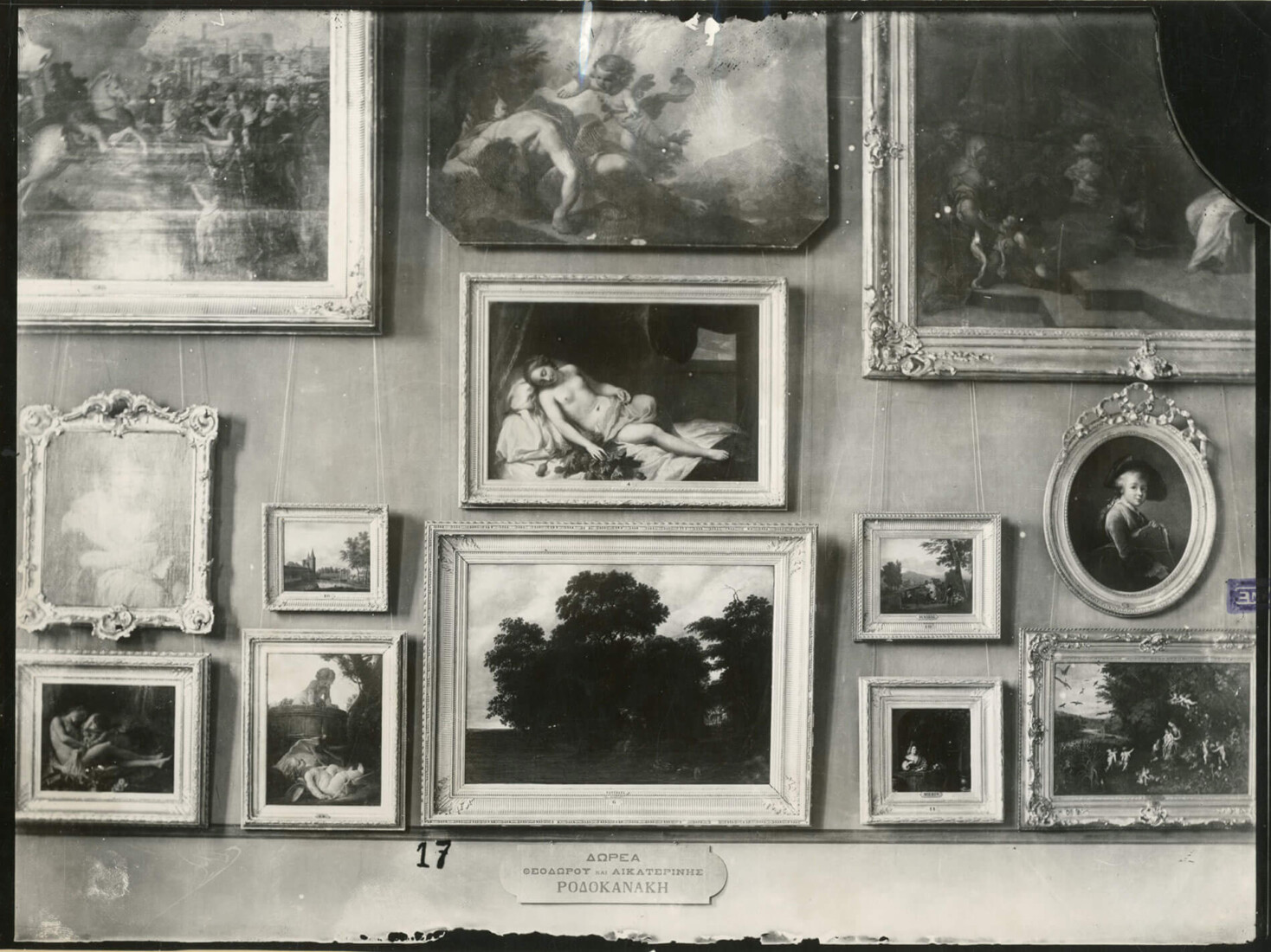
Georgios Iakovidis (1853-1932)
The National Gallery was founded on 10 April 1900 by Law ΒΨΛΔ΄, which provided for a supervisor; the painter Georgios Iakovidis (1853-1932) was appointed to this post. On June 28 1900, the Gallery’s rules of operation were laid down, according to which ‘The purpose of establishing an Art Gallery in Athens is the development and advancement among us of the sense of the beautiful, through the acquisition and exhibition to public view of works of the visual arts, and more specifically the instruction and study therein of those engaged in the fine arts.’ The artworks in its collection were divided into six sections, including ‘Byzantine… Medieval… Modern art (oil paintings)… watercolours, pastels and drawings… copies of paintings in other collections, and prints (woodcuts, copper engravings and other kinds of engravings…)’. The collection core consisted of 258 works of art from the collections of the National Technical University (NTUA) and the University of Athens, which were delivered to Georgios Iakovidis by NTUA’s director, Anastassios Theofilas, on 28 July 1900, as well as by the collection of lawyer and art connoisseur Alexandros Soutsos (1839-1895), who bequeathed his estate to the Greek state for the purpose of establishing and maintaining a museum of painting. His collection was delivered by Natalia Soutsou on 21 June 1901.
The rules of operation further provided for the establishment of an Art History library and granted the curator the right to enrich the founding core of the collection with selected works from various public institutions. The curator was likewise entitled to make purchases by submitting a reasoned proposal, subject to approval by the Ministry of Ecclesiastical Affairs and Public Education, under whose authority the Gallery had been placed. In addition, to meet its needs – and in particular to enrich its holdings with works of art – it was empowered to accept monetary donations, subscriptions and bequests.
As regards the question of housing, until such time as it acquired its own building, the Gallery was to be housed on the upper floor of the central wing of the National Technical University in Athens.
Georgios Iakovidis
On 24 February 1906, a royal decree was issued, whereby a six-member supervisory committee was appointed, consisting of leading personalities of the country’s political and entrepreneurial life: the later prime minister, Stefanos Skouloudis, and Stefanos P. Rallis, Markos Dragoumis, Petros Kalligas, Spyridon Stais and ThemosAnninos. The committee, in co-operation with the supervisor, was responsible for displaying, enriching, developing and preserving the gallery’s collections. In addition, the Gallery secured financial support – 3,000 Drachmas per year – for the first time, from the bequest of the Greek-diaspora benefactor, Dimitrios Doridis, who had left his fortune to the Greek nation to be used in public institutions.
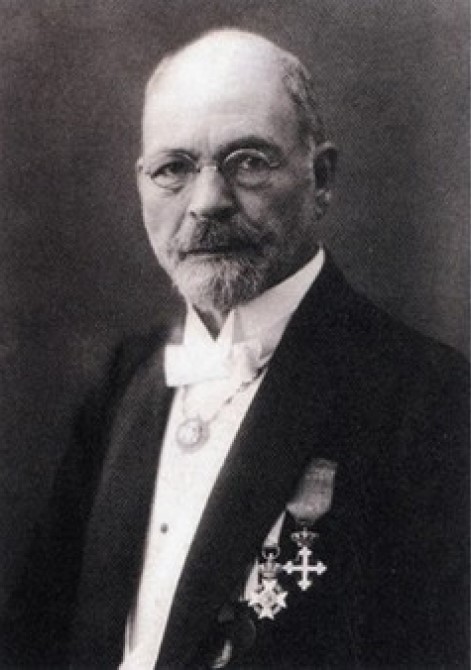
Collection enrichment was facilitated by adopting laws that ensured the allocation of art works to the Gallery, as well as by generous contributions by individuals inside and outside Greece. In this context, on 6 April 1911, the Georgios Averoff Estate Trustees donated to the Gallery the 80 paintings in Averoff’s collection, as well as 15 more, acquired with the estate’s funds, all of which went on display in a room of their own, named ‘Averoff Art Gallery’, according to the donor’s wish. Expatriate Greeks Theodoros and Aikaterini Rodocanaki, along with Grigorios Maraslis, were also among the greatest donors. The most significant bequests include those of the scholar Dimitrios Vikelas, the painter Theodoros Rallis, the expatriate businessman, banker, and national benefactor Marinos Korgialenios, and Roxani Kozaki-Typaldou.
The first major exhibition of works from the Gallery’s collection was announced in 1912, but only opened in 1915. Some 300 paintings, conserved by the painter Georgios Chatzopoulos, were shown in six large NTUA rooms.
In collaboration with the supervisory committee, Georgios Iakovidis also made strenuous efforts to resolve the housing issue, as the Gallery was in need of housing of its own, having been housed since its founding on the upper floor of NTUA’s main building. These efforts fell through due to disagreement over the building’s architectural style and location. In 1914, by law 477, a plot of land on Vassilissis Sofias Avenue and Rizari Street had been allocated; however, the building was not constructed, due to the objections of the military, to which the site belonged.
Nevertheless, in order to further the Gallery’s educational programme, Iakovidis introduced free admission for the public every Saturday and Sunday to NTUA’s rooms, which also served as an exhibition venue. He also published the Gallery’s first catalogues, in 1906 (which included the rules of operation) and 1915; moreover, he succeeded in securing two positions for ‘curators’, as conservators were called at the time, taken up by the painters Georgios Hatzopoulos and Odysseas Fokas.
Georgios Iakovidis served as the Gallery’s supervisor until 1918. In that year, a law was enacted which abolished the position of supervisor and established the post of director. This position was assumed by the man of letters and art lover Zacharias Papantoniou.
Zacharias Papantoniou (1877-1940)
In 1918, the Liberal government enacted Law 1434, ‘On the Organization of the National Gallery,’ which provided for a radical reorganization and upgrading of the museum, both at an administrative and financial level. Among other things, the law abolished the position of a supervisor and instituted the post of a director, which was taken by the writer and art critic Zacharias Papantoniou. The supervision and management of the Gallery were entrusted to a seven-member committee, replacing the previous six-member body, while the staff was also expanded, comprising: ‘[…] 2) the deputy director or, in his absence, a secretary; 3) the first and second curators; 4) five conservators; 5) a chief guard and three guards; 6) two attendants (male or female),’ whose salaries were likewise specified.
An annual grant from the ministry’s budget was set up for collection enrichment, for the first time, and a Board for artistic matters was established to advise the Ministry on acquisitions and donation acceptance, in place of the supervisor and the supervisory committee. The first Art Board consisted of Georgios Iakovidis (chairman) and members Zacharias Papantoniou, the painters Georgios Chatzopoulos and Konstantinos Maleas, and the writer Konstantinos Chatzopoulos.
The same law also established, for the first time, a Sculpture collection.
Papantoniou sought to resolve the Gallery’s major issues, unsuccessfully. He worked towards the merger of the National Gallery and the estate of jurist and art lover Alexandros Soutsos (1839-1895), who bequeathed his estate to the Greek state for the purpose of establishing and maintaining a museum of painting. In 1926, to resolve the housing issue, in cooperation with the Soutsos Estate Trustees, he acquired the Iliou Melathron, but cancelled the acquisition when he found out that the building was not suitable for a museum.
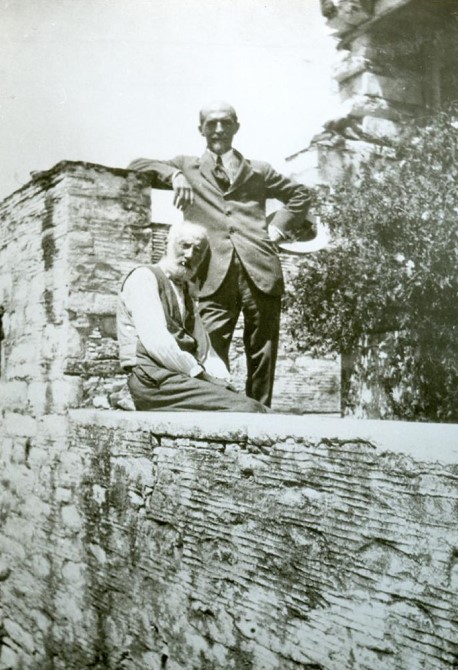
Zacharias Papantoniou
with the sculptor Giannoulis Chalepas in Tinos in 1924
Acquisitions to enrich the collections using the annual subsidy by the ministry, or special state subsidies involved works mainly by Greek artists, including Nikolaos Doxaras, Nikolaos Kantounis, Nikolaos Gyzis, Nikephoros and Nikolaos Lytras, Konstantinos Maleas, Dimitris Galanis, Panos Aravantinos, Konstantinos Parthenis, Nikolaos Cheimonas, Periklis Pantazis and Vassilios Hatzis, so as to provide a representative overview of painting from the Ionian School to modern times.
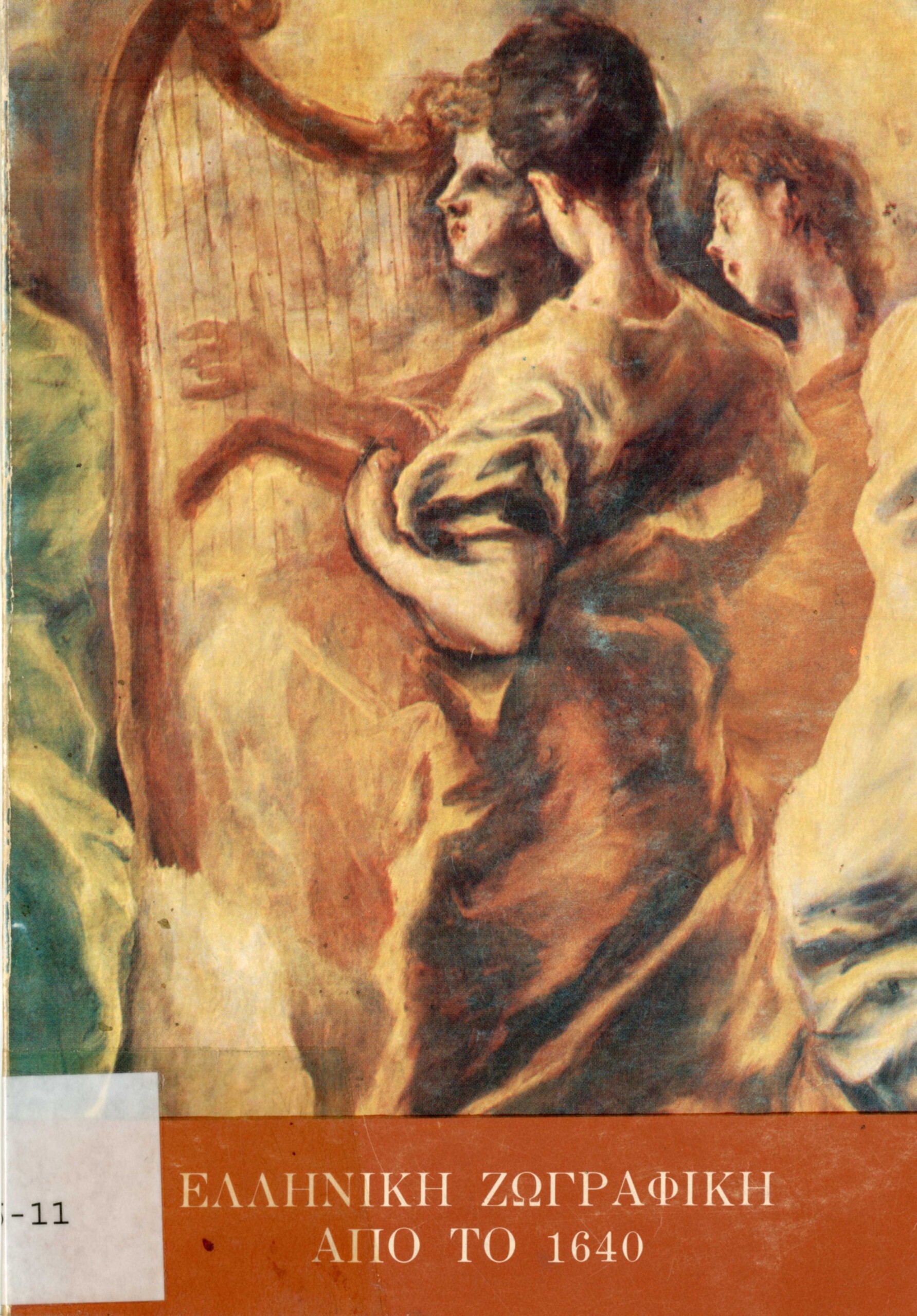
The first acquisition, funded by the Ministry’s budget, took place in 1919, when the Supervisory Committee, at its meeting of 9 April, approved the proposal of the Artistic Council to acquire The Slope by Konstantinos Parthenis. In 1931, moreover, the National Gallery’s most important acquisition was made at auction in Munich: Domenikos Theotokopoulos’s Concert of the Angels, the upper part of his Annunciation, was acquired for the sum of 5,900,775 Drachmas.
Donations were made by the Ministries of Education, Foreign Affairs and Transport, by the Bank of Greece and various institutions, by individuals – the largest of which was by K.G. Konstantinidis of Pontus – by artists or their families, as well as by members of the Supervisory Committee. Among the most significant bequests were those of Apostolos Chatziargyris, Alexandros Zachariou, Stefanos Skouloudis, Spyros Velentzas, and Nikolaos Diamantopoulos.
During Zacharias Papantoniou’s tenure, the Sculpture Collection was also inaugurated. In 1933, following unsuccessful attempts to purchase works, Antonios Benakis – founder of the eponymous museum, member of the Gallery’s Supervisory Committee from 1926 and its president from 1941 until his death in 1954 – donated to the museum its first sculpture, Female Torso by Konstantinos Dimitriadis. Thus, when the permanent display of the Painting Collection was reinstalled in 1934, four sculptures acquired through donations were presented to the public for the first time.
Papantoniou opened the museum to the public on a daily basis, introducing visiting hours with free admission.
In 1921, following the Liberals’ defeat in the 1920 elections, Papantoniou was removed from the directorship; however, he returned in 1923 by Royal Decree. He remained in this position until his death on February 1, 1940.
The 1940s
On April 1, 1940, two months after the death of Zacharias Papantoniou, the painter and conservator Georgios Stratigos (1876-1944) took over as the National Gallery’s director, but his office was also cut short when he died in November 1944. On 26 August 1945, the archaeologist Dimitrios Evanghelidis (1886-1959) temporarily took over as director, remaining in this position until 28 February 1947. On 1 March 1947, he was succeeded by the archaeologist and art historian Nikolaos Bertos (1885-1949), whose tenure was also interrupted by his death on 11 January 1949.
Dimitrios Evanghelidis, Nikolaos Bertos
Photos sourced from Wikipedia and Νεώτερον Εγκυκλοπαιδικόν Λεξικόν «Ηλίου, vol. 13, p. 965
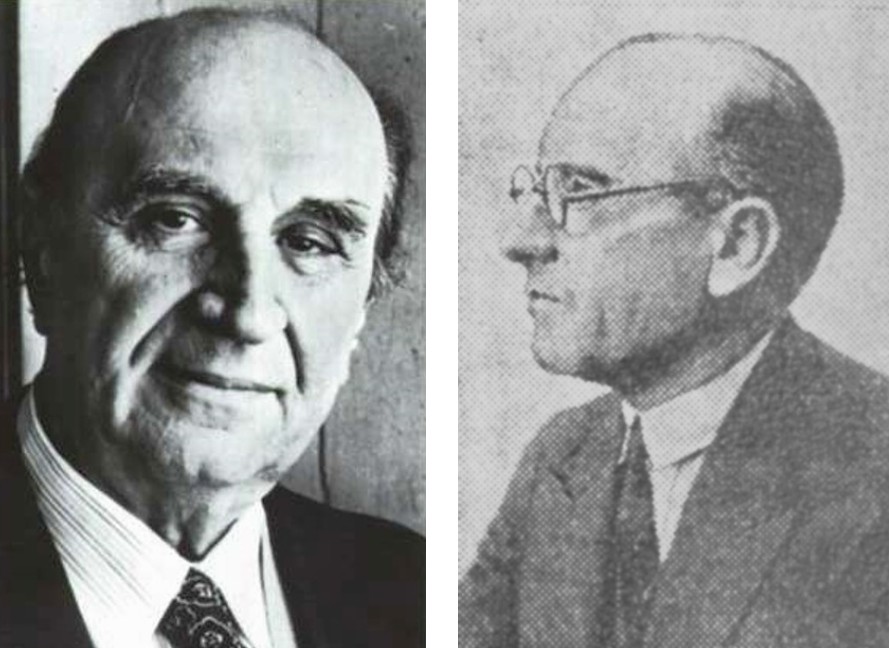
On 23 November 1944, Law 46, ‘On the Amendment and Supplementation of Law 2867/1922,’ was passed. In a single article, the law stipulated that: ‘The Director of the National Gallery shall be appointed by Decree, with the rank and salary of a full professor of the School of Fine Arts, being an accomplished visual artist with specialised studies abroad who has distinguished himself at official international exhibitions, or a graduate of a domestic or foreign equivalent university with specialised studies in aesthetics and the fine arts, possessing – through writings of an aesthetic and artistic nature – proven competence in art criticism,’ thereby opening the way to archaeologists and art historians.
During the War and the German occupation, the main concern was to safeguard the artworks, which were transferred to the National Archaeological Museum and the most valuable among them to the Bank of Greece treasury. In January 1941, however, the Gallery was obliged to vacate the National Technical University building, which was requisitioned to host a military hospital for the wounded and later used by the German occupation army. Its premises were immediately re-occupied by the NTUA, on the grounds that the number of students and therefore the teaching needs had increased. In a formal communication to the Ministry of Religious Affairs and National Education in August 1941, the Supervisory Committee described the loss of the premises as a “most severe blow”, as the artworks were stored in crates and at risk of deterioration due to the lack of ventilation and natural light; the Committee urgently requested the procurement of alternative facilities as soon as possible. However, the issue was not immediately resolved; the National Gallery was temporarily housed at the Benaki Museum while the artworks remained in storage. It was not until June 1946 that two floors of the Casa d’Italia building were allocated to the Gallery. Nevertheless, the Casa d’ Italia proved to be an inadequate venue. The Supervisory Committee addressed a stern and agonizing letter to the Minister of Finance in December 1946, depicting the situation in the direst terms. Nikolaos Bertos also placed emphasis on the unsuitability of the premises in the ‘Inventory Bulletin of Real Estate Used for the Housing of Public Services,’ addressed in September 1947, to the Directorate of Fine Arts of the Ministry of Education; therein, he requested the re-establishment of the National Gallery within the premises of the NTUA. Finally, in 1948, a wing of the old National Archaeological Museum building was granted, where the artworks were transferred immediately. In January 1950, however, the Gallery was once again forced to vacate its new premises due to construction work scheduled for the Museum’s wing and return to Casa d’ Italia, where it remained housed until 1955.
The museum’s limited operation in the 1940s only permitted minimal enrichment of the painting collection. Nevertheless, in 1946, the Gallery received a very generous donation. Odysseas Fokas, a conservator since 1915, bequeathed his movable and immovable property ‘for the enrichment of the international modern art section’. His bequest made Fokas the second great benefactor, following Alexandros Soutsos.
In addition, after the Liberation, a substantial donation of French artists’works was made – in tribute to the Greek people’s heroic stance during the German occupation – an idea put forth in 1942 by intellectual and literary figure Roger Milliex and his companion, Tatiana Gritsi-Milliex. It comprised 28 paintings, 6 drawings, 6 engravings, 4 sculptures and 2 books, delivered to the National Gallery in July 1949. In the same year, through the Nikolaos I. Iliopoulos bequest, the Sculpture collection was enriched with five characteristic 19th-century sculptures from the Thon Villa, which had been destroyed in December 1944.
Marinos Kalligas (1906-1985)
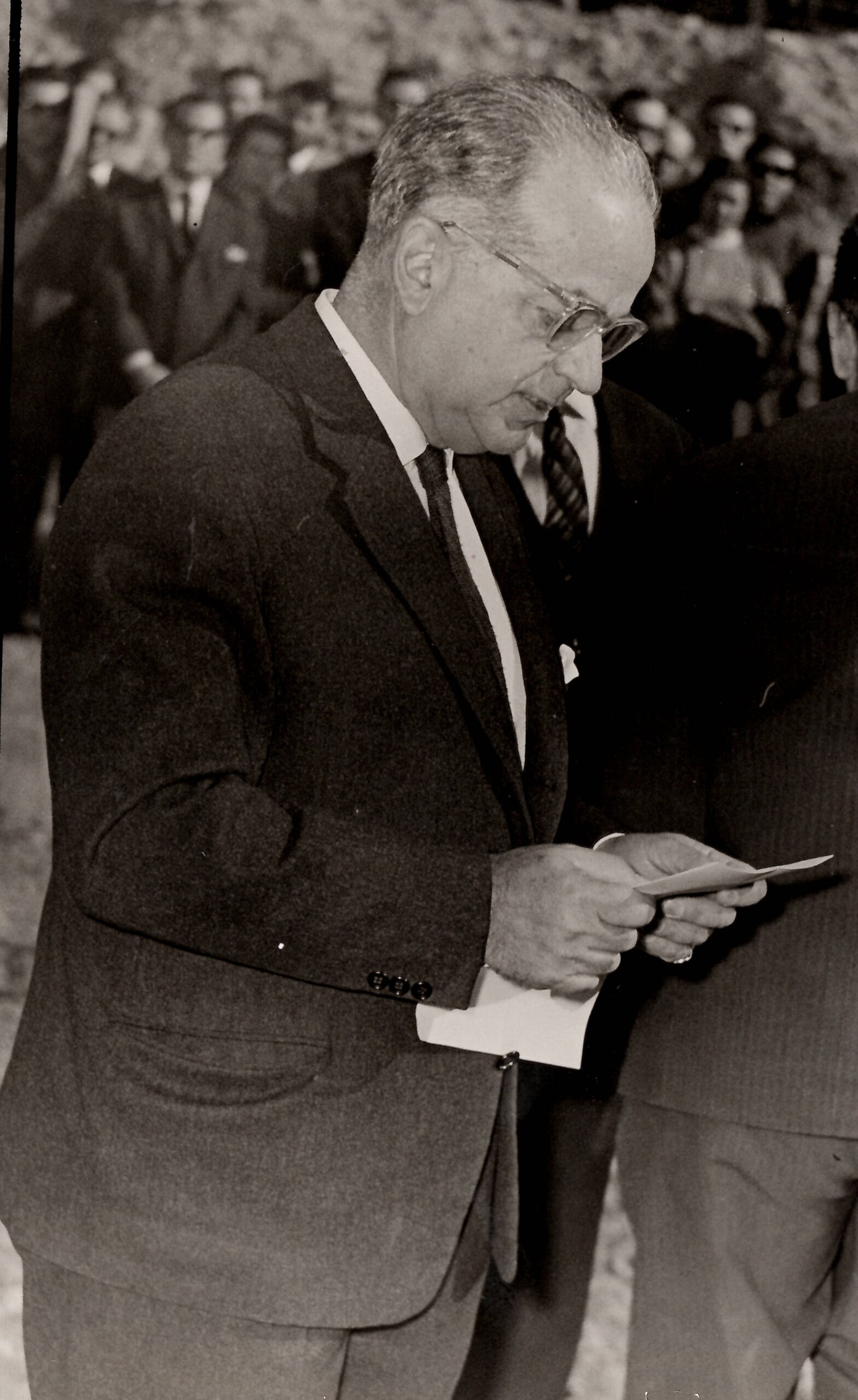
On June 6, 1949, the art historian and Byzantinist Marinos Kalligas (1906-1985) assumed the directorship of the National Gallery, remaining in this position until May 2, 1971. Under his leadership, the museum moved into a new era, resolving long-standing issues or setting the stage for their eventual solution.
Securing permanent premises
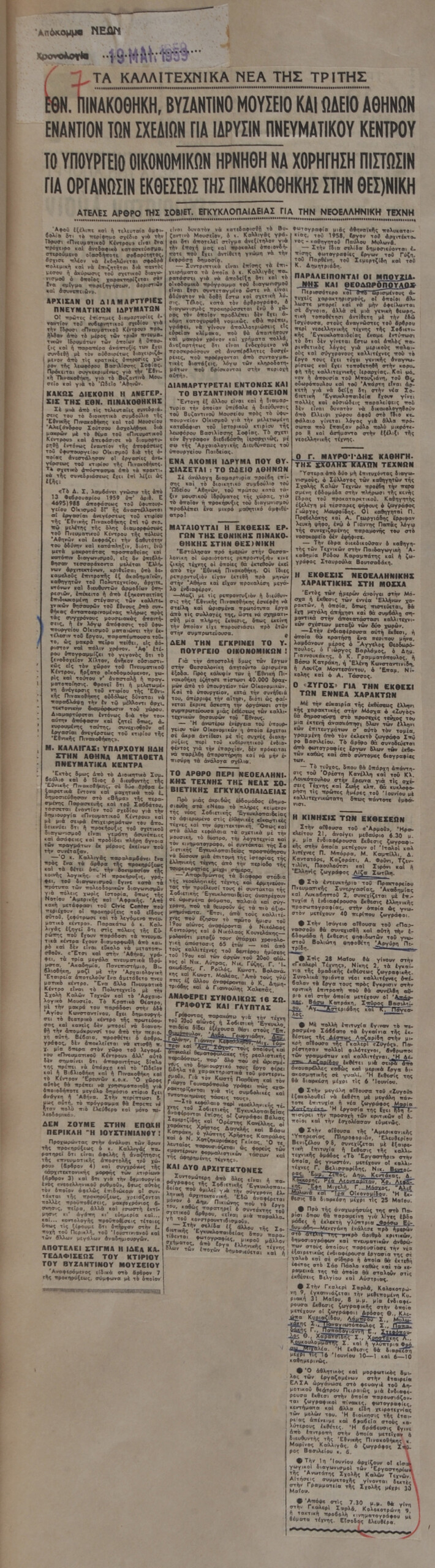
Securing permanent premises was one of the first priorities for Marinos Kalligas. From 1950 onwards, the National Gallery was housed in the Casa d’ Italia. In 1955 it moved to two floors at 11, Kolokotroni Street, since Casa d’ Italia had been handed back to the Italian state. In 1959, both the administration and the artworks moved to the Artillery barracks at the corner of Rizari Street and Vassilissis Sofias Avenue. In 1956, however, a competition had been launched for the construction of a building. The proposal by architects Pavlos Mylonas, Dimitris Fatouros and Nikos Moutsopoulos was selected. However, despite the commencement of excavation works for the building’s foundation, the Undersecretary of Housing issued a decision on February 13, 1959, to suspend operations temporarily. This was due to the government’s announcement of an urban and architectural competition for the development of Athens’ ‘Cultural Center’, into which the Gallery was to be integrated. This decision sparked vehement reactions from the Director and the Board of Directors, who drafted a formal protest memorandum published in the newspaper Ta Nea on May 19, 1959. Resolutory protests against the suspension were also issued by the Byzantine Museum, the Athens Conservatory, the Chamber of Fine Arts, the Committee of Law 1469/1950, the Faculty Association of the Athens School of Fine Arts, and other institutions, alongside numerous intellectuals. Nevertheless, the construction on that specific site was aborted. In compensation, a plot within the triangle of Vassileos Konstantinou, Vassileos Alexandrou, and Michalakopoulou streets was granted to the Gallery in 1960, where, on November 26, 1964, the foundation stone of the first of its current buildings was laid.
The construction on the new plot was based on the original design, which was revised by Pavlos Mylonas and Dimitris Fatouros, as Nikos Moutsopoulos had assumed his duties as a professor at the Faculty of Engineering of the Aristotle University of Thessaloniki. Subsequently, Dimitris Antonakakis joined the team. To practically verify the structural integrity and functional efficacy of the design – specifically regarding lighting, hanging systems, and the display of artworks – a full-scale mock-up of a hall was constructed using wood, hardboard, and fabric; within this structure, panels were installed and paintings were hung for experimental testing.
The first section of the building was completed in 1968. The building was a two-story structure with a downward-sloping development. The ground floor housed the museum entrance and a hall for temporary exhibitions, while the lower level contained interim storage facilities, a cafeteria, and other amenities. A mezzanine floor was also incorporated, which served as the temporary site for the director’s and staff’s offices until the completion of the second section.
The first exhibition with works from the collections was inaugurated on 14 May 1970. Mean while, in 1968, the National Gallery had once again been forced to move, this time to an apartment at the corner of Efroniou Street and Vassileos Alexandrou Avenue. The artworks went into storage in the building’s basement.
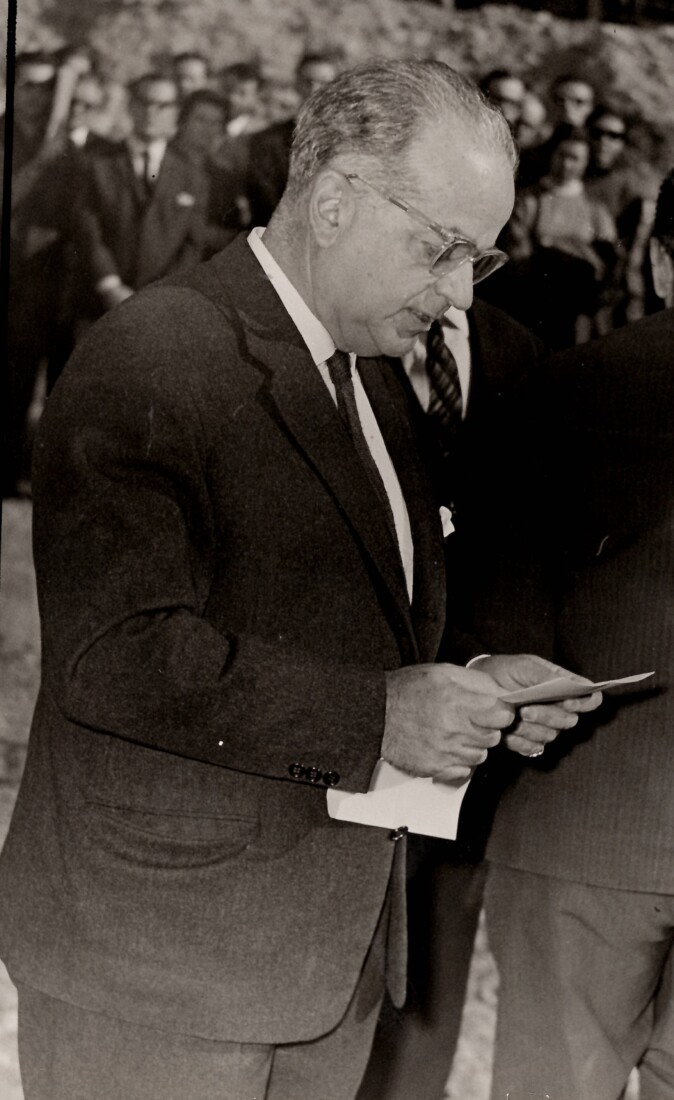
Marinos Kalligas
at the foundation stone ceremony of the building
Incorporation of the Alexandros Soutsos bequest into the National Gallery
In 1954, Law 2814 ‘On the establishment of a legal entity of public law under the name “National Gallery and Alexandros Soutsos Museum”’ came into force, whereby the Alexandros Soutsos Estate was merged into the National Gallery.
Upon the enactment of the law, the seven-member Supervisory Committee was replaced by a Board of Directors of equal size, comprising three permanent members and four individuals ‘engaged in the arts.’ As stipulated in Soutsos’s will, the three permanent members – the President of the Court of Audit, the Governor of the National Bank of Greece, and a member of the Soutsos family – were entrusted with the management of the bequest. The National Gallery’s resources continued to include the annual appropriations for operating expenses and the acquisition of artworks, as mandated by Laws 1434/1918 and 4605/1930 respectively, which were incorporated into the budget of the Ministry of National Education and Religious Affairs. Furthermore, its funding was supplemented by inheritances, donations, bequests, and extraordinary state grants, as well as the revenues generated by Alexandros Soutsos’s movable and immovable property. These provisions were instrumental in securing permanent premises, while also facilitating the augmentation of the collections and the library.
Enrichment of the collections and formation of archives
Under Marinos Kalligas the enrichment of the collections became more systematic through both purchases and donations; the latter were often the result of the director’s personal encouragement. Significant donations were made by Argyris Chatziargyris, Dimitrios and Sappho Balanou, and Matthew Renieris, as well as by various artists and the Ministry of Education. Among the most significant bequests were those of Antonios Benakis, Alexandros Oikonomou, Miltiadis Embirikos, and Nikolaos Antonopoulos.
The painting collection was enriched with works by both earlier and contemporary artists. Thus, the museum acquired works by Nikolaos Koutouzis, Nikolaos Kantounis, Emilios and Spyridon Prossalentis, Nikolaos Gyzis, Nikephoros Lytras, Konstantinos Volanakis, Francesco Pige, Ioannis Altamouras, Vicenzo Lanza, Polychronis Lembesis, Konstantinos Parthenis, Dimitrios Galanis, Giorgos Bouzianis, Konstantinos Maleas, Symeon Savvidis, Theophrastos Triantaphyllidis, Spyros Papaloukas, Spyros Vassiliou, Nikos Hadjikyriakos-Ghika, Georgios Manoussakis, Yannis Tsarouchis, Alekos Kontopoulos, Yannis Moralis, Yannis Spyropoulos, and Dimitris Mytaras. It was an effort to represent the most prominent figures from all periods and artistic trends.
The sculpture collection was augmented, providing a more complete overview of the field, spanning from the Ionian Island School and the early Neoclassical sculptors of the 19th century to the contemporary era. Furthermore, Kalligas, established a systematic purchasing policy for the sculpture collection as well, which until then had been enriched solely through donations. The engraving collection received high-quality prints, including by French artists as well as Rembrandt, Pieter Bruegel the Elder, Dürer, and Goya.
Marinos Kalligas likewise oversaw the systematic enrichment of the existing art history library – founded on the library of Alexandros Soutsos – through the acquisition of specialised art publications. He further saw to the creation of individual artist files containing information on their life, studies and work, as well as rare archival items such as manuscripts and letters.
During the same period, a significant photographic archive of works from the museum’s own collections began to take shape, drawing also on holdings from other institutions, private collections and outdoor sites. A further photographic archive of Greek and foreign photographers of the nineteenth and twentieth centuries was assembled, covering a wide range of subjects – depictions of buildings, monuments and churches, historical and war scenes, artists and other named or anonymous individuals, scenes of everyday life, and photographs of Athens and other cities – sourced through acquisitions, donations and bequests. Finally, an archive of art-related press cuttings began to be compiled, alongside a collection of exhibition catalogues, whose core consisted of those bequeathed to the museum by Odysseas Fokas.
For the first time, works were catalogued on index cards and the archives were organised – largely through voluntary effort, owing to a shortage of staff.
Public display of the artworks
Until the housing issue was resolved, a temporary solution was provided for public display of art between 1953-1959, by organising exhibitions from the Gallery’s collections at the Zappeion Hall. To accompany these exhibitions, small yet quite detailed catalogues were published (1953, 1954, 1955/1, 1955/2, 1956, 1957) the first ones to follow those published by Georgios Iakovidis in 1906 and 1915. Temporary exhibitions were also organised, including a selection from Stavros Niarchos’ collection in 1958, as well as exhibitions from the collections of the National Gallery in other cities (1955, 1962/1, 1962/2).
The first display of works from the National Gallery’s collections within its permanent home was inaugurated in 1970. The exhibition, accompanied by a concise guide, was primarily dedicated to the painter Nikolaos Gyzis, marking the seventieth anniversary of his death. It also featured paintings and prints by Greek and foreign artists, several sculptures, as well as objects and furniture, largely sourced from the Odysseas Fokas bequest.
On 2 May 1971, while the second section of the building was still under construction, Marinos Kalligas retired from the directorship of the National Gallery upon reaching the statutory age limit.
Andreas Ioannou (1918-1972)
Following Marinos Kalligas, the lawyer and former prefect Andreas Ioannou (1918-1972) was appointed as director of the National Gallery; however, his term was cut short by his death in August 1972.
During Andreas Ioannou’s brief tenure, Alexandros Iolas made a substantial donation of seven artworks by contemporary, mainly foreign artists.
Andreas Ioannou
photo sourced from: https://sotirislambrou.blogspot.com/search/label/
Dimitris Papastamos (1923-2008)
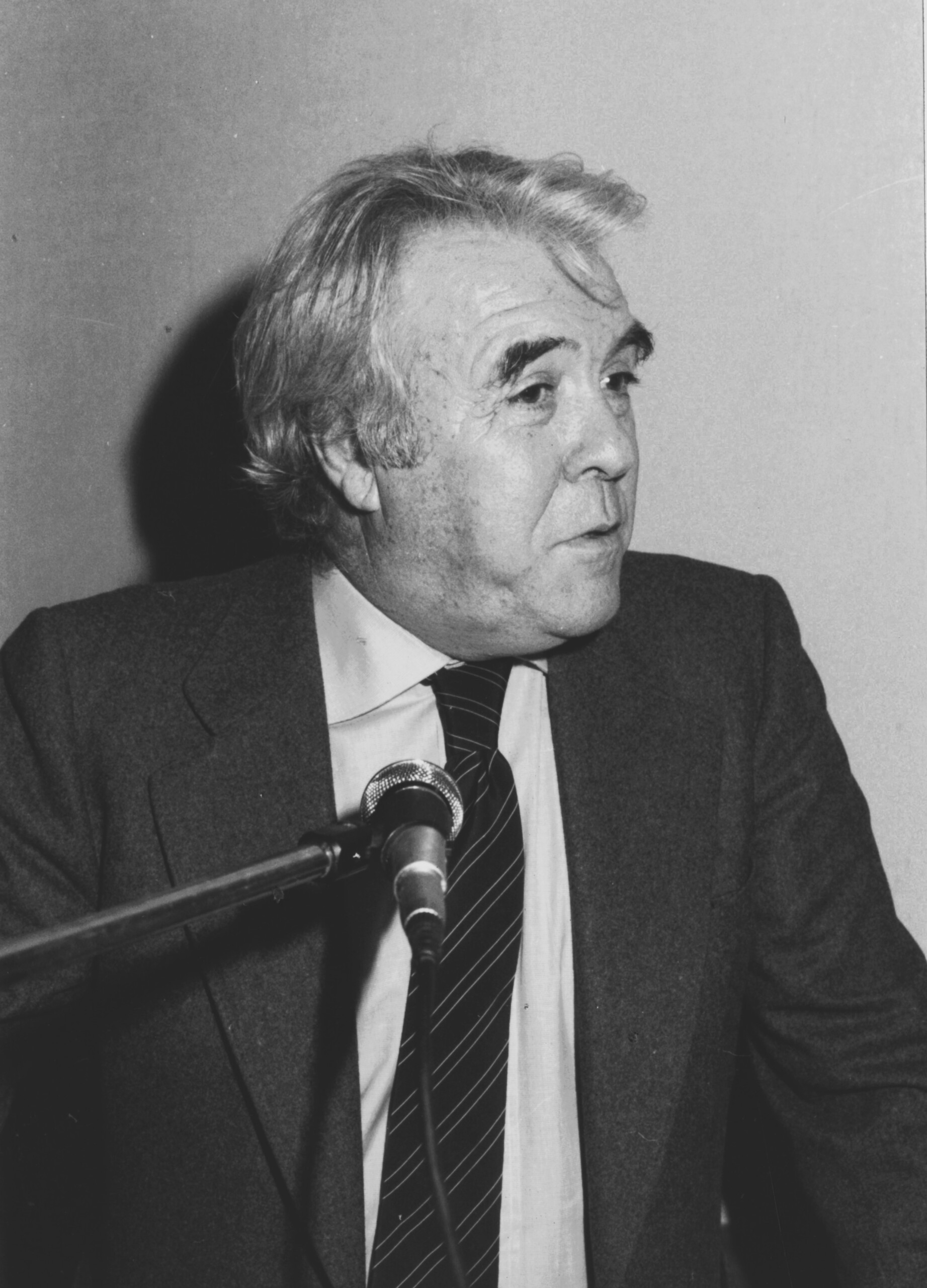
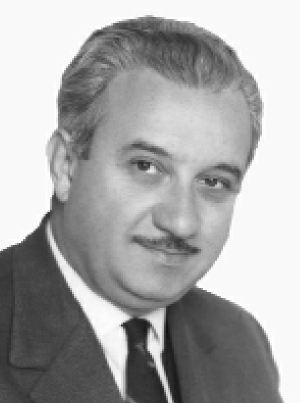
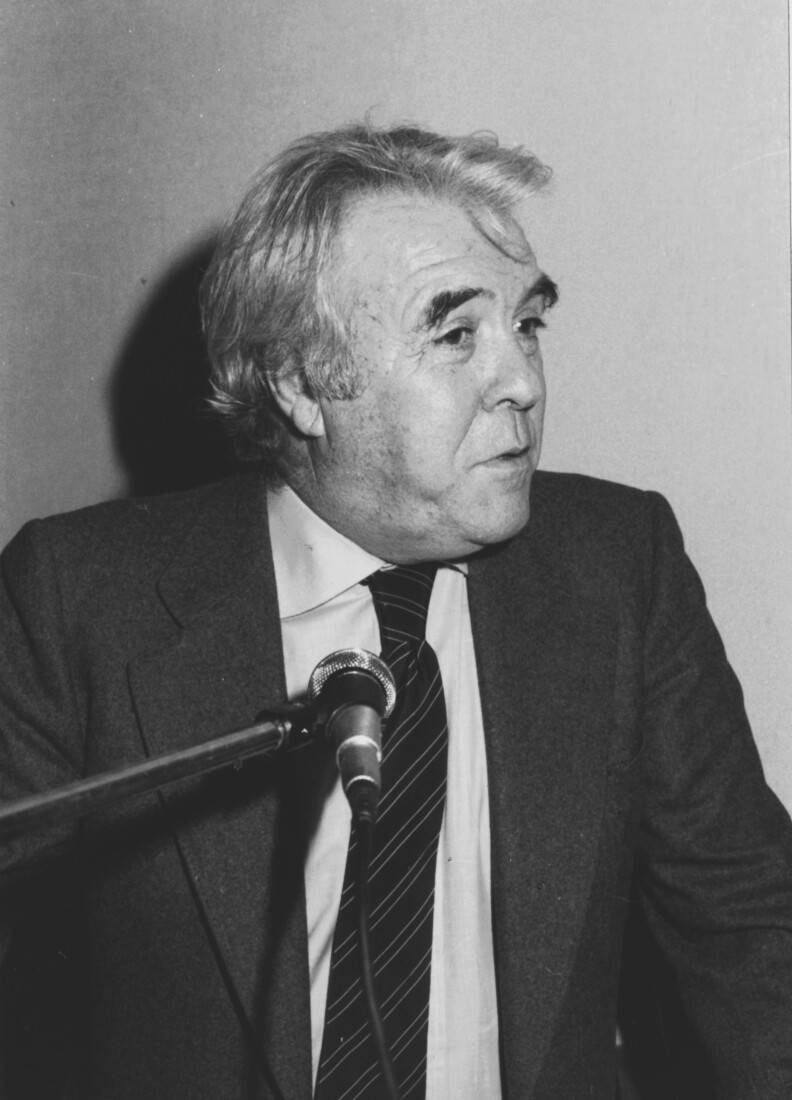
In December 1972, the archaeologist and art historian Dimitris Papastamos (1923-2008) took over the direction of the National Gallery, remaining in this position until October 1989.
During Dimitris Papastamos’s tenure, the National Gallery was firmly consolidated, the result of the final resolution of the question of housing and a radical administrative overhaul.
Dimitris Papastamos
Completion of the building and expansion of activities
In 1974, Prime Minister Konstantinos Karamanlis and Minister of Culture Konstantinos Tsatsos entrusted Dimitris Papastamos with the completion of the building, as well as the design and implementation of a museological and exhibition program for the museum’s operation and the presentation of its permanent collection. By 1976, the second section of the building complex was completed; however, the original architectural plan had undergone significant modifications, including a reduction in the number of intended floors. Two floors were designated for permanent exhibitions, one for administration, the library, and conservation laboratories, while the basement was reserved for art storage. The two sections of the building were connected via an enclosed pedestrian bridge.
The National Gallery was officially inaugurated on 17 May 1976 by the President of the Hellenic Republic, Konstantinos Tsatsos, and Prime Minister Konstantinos Karamanlis. For the first time, an opportunity arose to mount a more representative exhibition of the museum’s collections, in which, according to the press of the time, 400 works of Greek painting, 200 of Western European painting, 100 prints by Greek artists, 140 by foreign artists (as they were referred to at the time), and approximately 70 sculptures by Greek artists were displayed, alongside sculptures by Antoine Bourdelle and René Magritte. The exhibition was accompanied by a catalogue including a historical overview of the Gallery by the director, a catalogue of Greek paintings, biographical information on the artists and a selection of images. A leaflet devoted to the sculptural works was also published for the first time.
Administrative reorganization
In 1980, Law 1079 was passed, which regulated the structure and operation of the National Gallery -Alexandros Soutsos Museum. This law abolished most of the provisions of Law 2814/1954 and instituted new activities, enabling the collections to be expanded and the museum departments to be reorganised and developed in line with modern requirements.
Thus, the National Gallery agencies were set up as a Directorate General with three Directorates: i. Collections, Artistic and Museological Programming, ii. Administrative-Accounting, and iii. Art Conservation and Restoration. Staff growth was spectacular and covered all the requisite specialties, while the curation of the collections was for the first time assigned to art historians, who also catered to their systematic organisation.
Enrichment of the collections
During Dimitris Papastamos’s tenure, the collections were significantly augmented, primarily with works by Greek artists. The objective was to include contemporary Greek art, alongside the works of creators of previous generations. This enrichment was achieved mainly through donations from artists, their families, and private individuals, as well as from the Ministry of Culture and Sciences, often at the director’s own instigation. Notable among them were significant donations including artists as Tassos, Nikolaos Ventouras, Alexandros Korogiannakis, Yannis Kefallinos, Georgios Moschos, Pavlos Moschidis, Konstantinos Parthenis, Umvertos Argyros, Giorgos Gounaropoulos, Nikos Hadjikyriakos-Ghika and Yannis Moralis. Also, Eugène Delacroix’ Greek Fighter on Horseback was acquired, thanks to the support of Stavros Niarchos and Vassilis Goulandris; the large-scale fresco by Fotis Kontoglou installed in the artist’s home was acquired with support from Vassilis and Nikos Goulandris; and Rodin’s The Prodigal Son was acquired with funds from Odysseas Fokas’ bequest as well as a financial contribution by Vassilis Goulandris.
Exhibition activity
The resolution of the housing issue enabled the permanent display of the collections, which since 1977 included works from the Evripidis Koutlidis collection. Moreover, extensive and systematic exhibition activity was developed, emphasising on the promotion of Greek artists’ work. Among others, exhibitions were presented featuring the works of Nikos Hatzikyriakos-Ghika (1973, 1986), Angelos Giallinas, Giorgos Gounaropoulos, Giorgos Sikeliotis, Spyros Vassiliou, Tassos, Spyros Papaloukas, Alekos Kontopoulos, Aghinor Asteriadis, Giorgos Bouzianis, Dimitris Yoldassis, Diamantis Diamantopoulos, Theodoros Stamos, Orestis Kanellis, Fotis Kontoglou, Dimitris Pikionis, Vasso Katraki, Panos Aravantinos, Konstantinos Maleas, Thanos Tsingos, Polykleitos Regkos, Giorgos Paralis, Alexandros Alexandrakis, Aglaia Papa, Georgios Moschos, Yerassimos Steris, Panos Valsamakis, Tilemachos Kanthos, Panayiotis Tetsis, Nikos Engonopoulos, Angelos Theodoropoulos, Kostas Plakotaris, Theofilos, Stelios Miliadis, Periclis Vyzantios, Kostas Koutsouris, long-time conservator of the National Gallery, Michalis Axelos, Yannis Gaitis, Anna Kindyni, Kostas Iliadis, Giorgos Mavroidis, Lefteris Kanakakis, Alexandros Korogiannakis, Yannis Moralis, Rallis Kopsidis, Christos Dagklis, Giorgos Vakirtzis, Agamemnon Makris, Lazaros Lameras, Chryssa, Bella Raftopoulou, Michael Lekakis, Christos Kapralos, Dimitris Ferentinos, Thanassis Apartis, Theodoros, Aglaia Lyberaki, Alex Mylona, and Andreas Papachristos.
Exhibitions of foreign artists were also held, such as those of Georg Grosz, Edward Lear, Oskar Kokoschka, Francisco Goya, J.M.W. Turner, Henry Moore, Käthe Kollwitz, Edvard Munch, Max Ernst, Giorgio de Chirico, and the exhibition Picasso and the Mediterranean, many of which took place within the framework of transnational exchanges. Furthermore, some outstanding group exhibitions were held, such as Memories and Revivals of the Classical Spirit. Treasures from the Metropolitan Museum of Art, New York (1979), Impressionists and Post-impressionists from French Museums (1980), Japanese Woodblock Prints Ukiyo-E, Saito Collection, 17th-19th century (1981), Bauhaus (1982), Eugène Delacroix: Greece on the Ruins of Missolonghi, Auguste Rodin: The Burghers of Calais, and Reminiscences, Transformations, Quests. Painting, Sculpture, Engraving, as part of the events for “Athens Cultural Capital of Europe 1985”, German Expressionism. The Buchheim collection (1985), and the Terracotta Army of Emperor Qin Shi Huang (1988).
Exhibitions were also organized in other countries as well as all around Greece, aiming at promoting visual arts education, especially among school children. A variety of art events, lectures, conferences, theatrical performances of children’s plays and puppet theatre were also organised, and a children’s workshop was set up.
Establishment of the Coumantaros Art Gallery and the first Glyptotheque
In 1983, the Coumantaros Art Gallery was established in Sparta, becoming the first National Gallery Annexe. The Coumantaros Art Gallery is housed in the neoclassical building kindly donated, along with their collection, by George Coumantaros and his sister, Dolly Goulandris, in honor of their father, John Coumantaros.
In 1986, with the financial contribution of the painter and engraver Koula Bekiari-Vekri, the first Glyptotheque was established in independent premises in the museum, which bore the inscription ‘Vassileios and Anna Bekiari Gallery’ in honor of the donor’s parents. This was the first independent permanent display of the National Gallery’s collection of sculpture and traced the evolution of Modern-Greek sculpture until 1940. It was curated by the National Gallery curator, Olga Mentzafou. The first Glyptotheque remained in operation until the early 1990s.
In October 1989, Dimitris Papastamos retired upon reaching the age limit.
Mary Michailidou
Following Dimitris Papastamos, Mary Michailidou, Head of the Department of Folk Culture of the Hellenic Ministry of Culture, became the Chief Executive Officer since November 1989. In April 1990, she was appointed as director, serving until 14 June 1991.
During her tenure, Mary Michailidou organized a new display of part of the National Gallery’s collections, featuring 19th-century art. Retrospective exhibitions of the oeuvre of mainly Greek but also foreign artists were also organized.
In June 1991, Mary Michailidou was recalled to the Central Service of the Ministry of Culture.
Mary Michailidou
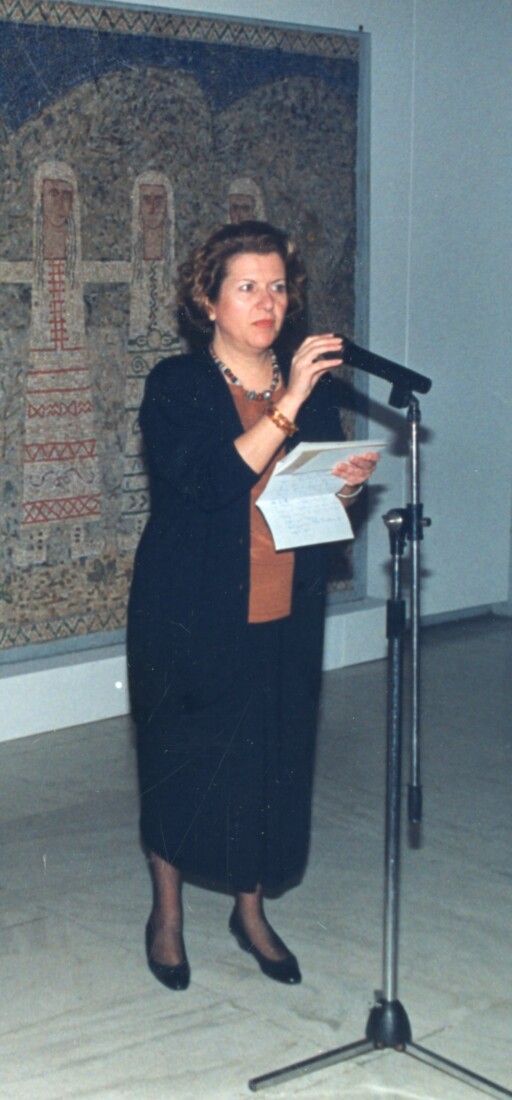
Nelly Missirli (1939-2011)
Following Mary Michailidou, Nelly Missirli, curator at the National Gallery since 1961 and Head of the Directorate of Collections, Artistic and Museological Programming, was appointed as director.
During her tenure, significant exhibitions featuring works from the National Gallery’s collections were held, as well as exhibitions of Greek and foreign artists. Furthermore, Nelly Misirli participated – alongside Art History Professor Marina Lambraki-Plaka and painter Panayiotis Tetsis – in the selection committee for European artworks from the Metropolitan Museum of Art in New York and the National Gallery of Art in Washington, D.C., for the organization of the exhibition From El Greco to Cézanne, which opened in December 1992.
Nelly Missirli remained in the directorship until January 1992, as the post had been advertised in the summer of 1991.
Nelly Missirli
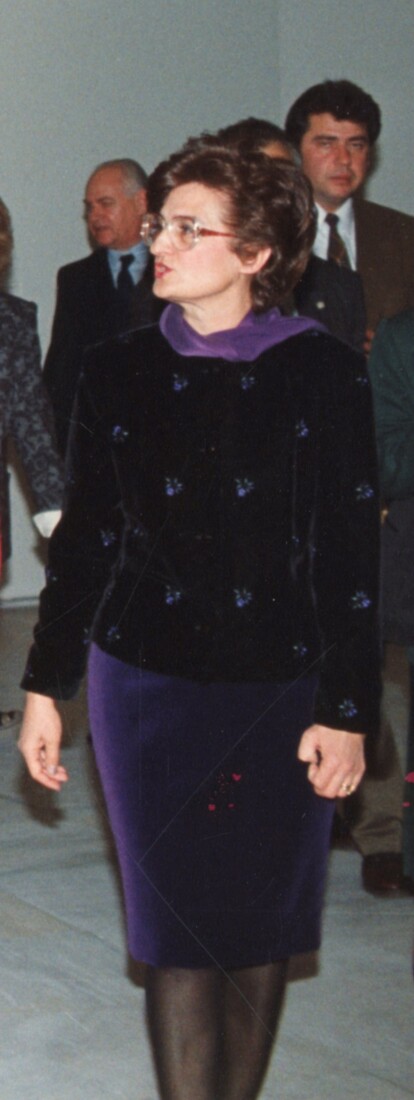
Marina Lambraki Plaka (1936-2022)
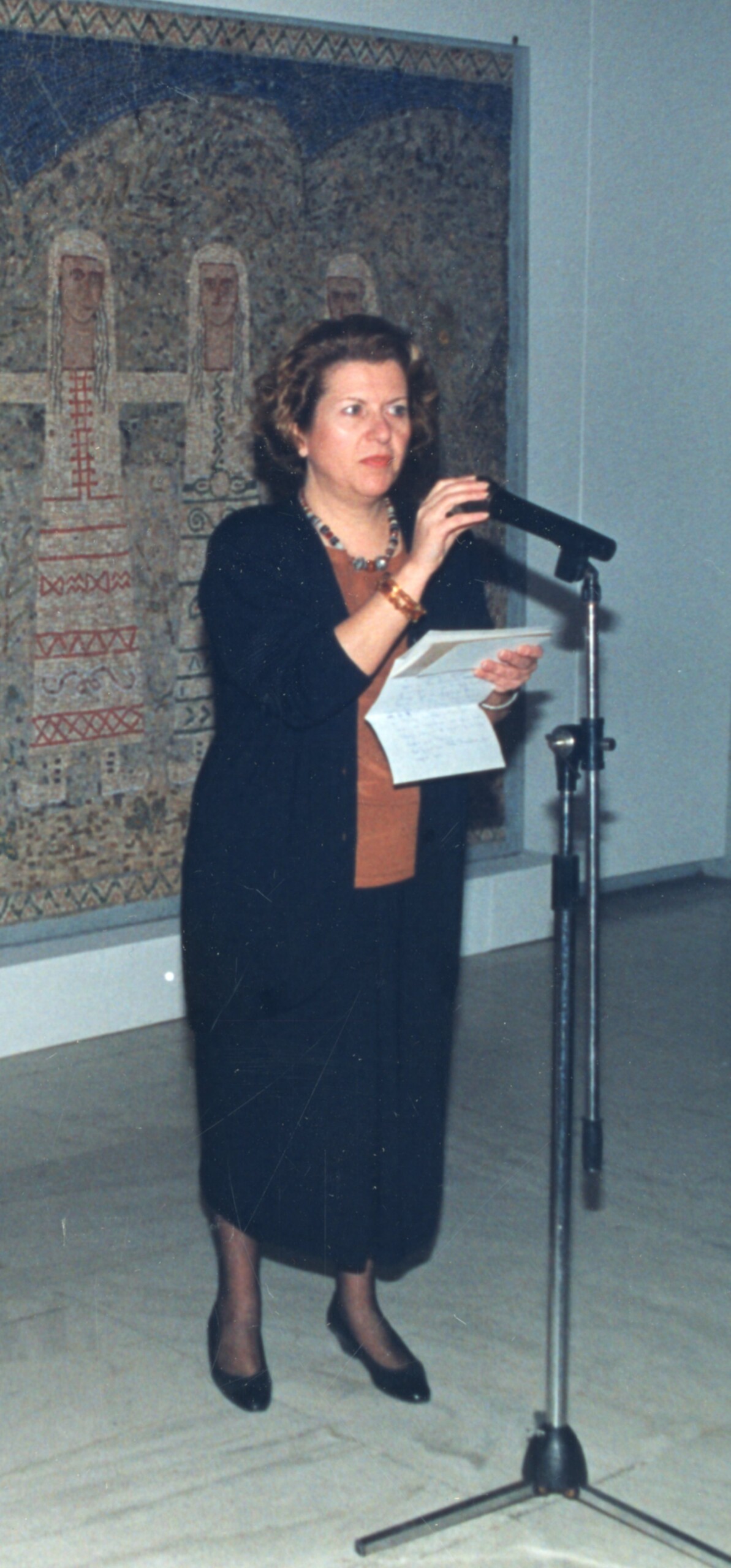
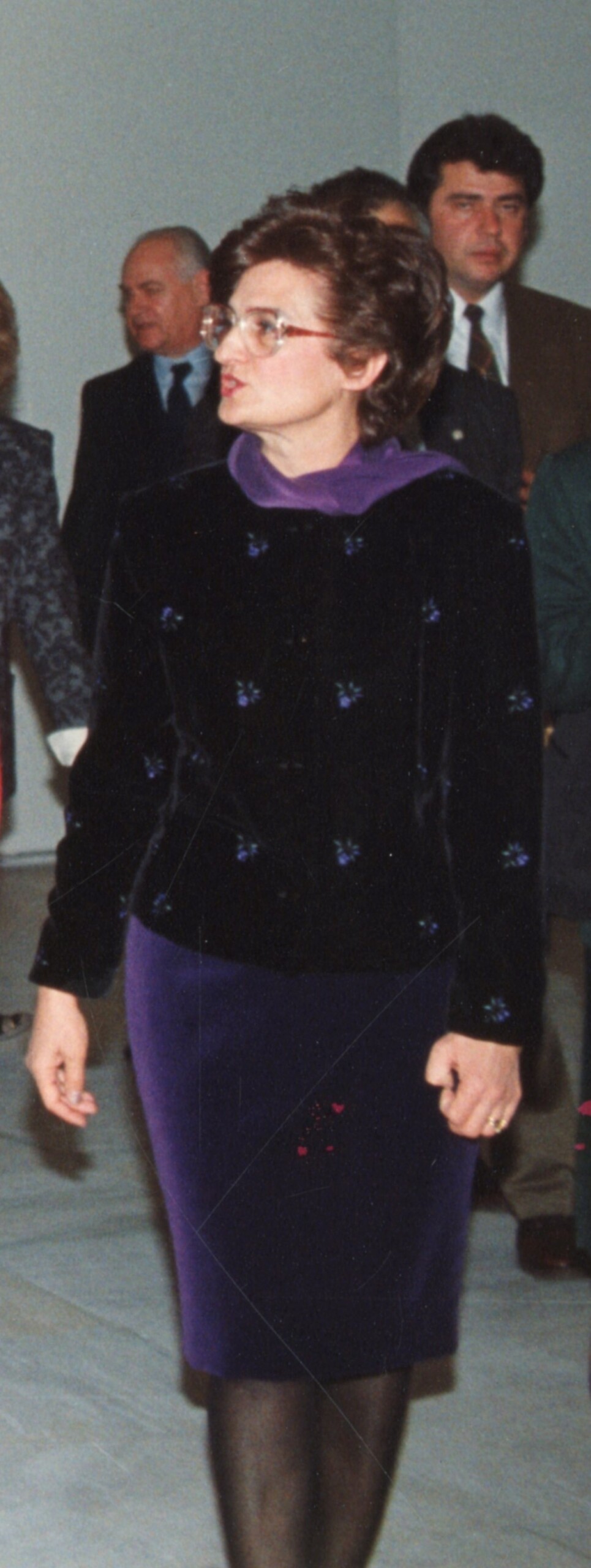
On January 17, 1992, the art historian and professor at the Athens School of Fine Arts, Marina Lambraki-Plaka, took over the direction of the National Gallery. She remained in this position until her death, on June 13, 2022.
Marina Lambraki-Plaka
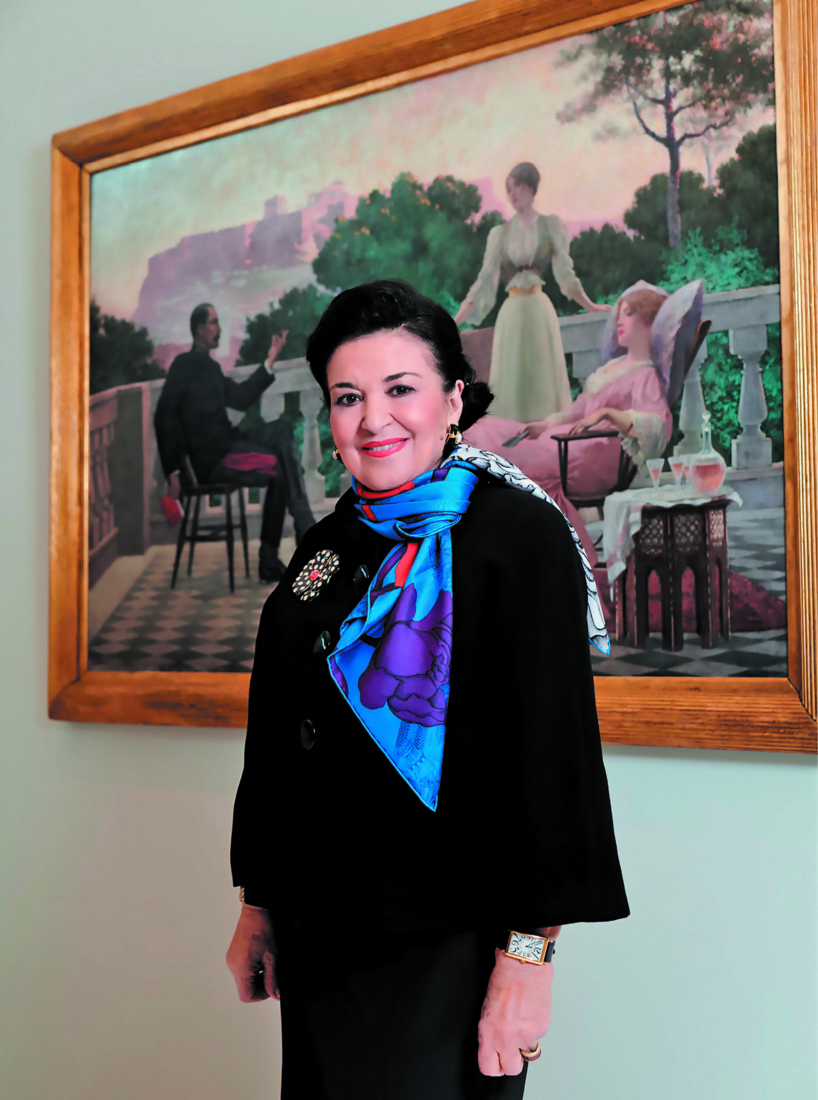
Emphasis on the museum’s exhibition activity
When Marina Lambraki Plaka took over as director, the goal was further improvement of the museum, modernization based on new standards, and the expansion of its diverse activities. By widely establishing the institution of sponsorship, Marina Lambraki Plaka placed particular emphasis on developing an extensive exhibition program and, specifically, on collaborating with major international museums, so that the public would have the opportunity to see significant works of art in Greece.
The exhibition From El Greco to Cézanne. Masterpieces of European Painting from the National Gallery of Art, Washington and the Metropolitan Museum of Art, New York was the first in a series of similar events. Icons of Cretan Art: from Candia to Moscow and St. Petersburg (1993), Gates of Mystery: Treasures of Orthodoxy from Holy Russia (1994), El Greco in Italy and Italian Art, Russian Avant-Garde (1910-1930). The G. Kostakis Collection (1995), La Grece en revolte: Delacroix et les peintres francais, 1815-1848 (1998), El Greco. Identity and Transformation (1999), Athens – Munich: Art and Culture in Modern Greece, Greek Gods and Heroes in the Age of Rubens and Rembrandt (2000), The Golden Age of Dutch Painting – The Dordrechts Museum Collection, Picasso’s century. Spanish art of the 20th century (2002), In the light of Apollo. Italian Renaissance and Greece (2003), Six Leading Sculptors and the Human Figure. Rodin, Bourdelle, Maillol, Brancusi, Giacometti, Moore, Imperial Treasures from China (2004), Paris – Athens, 1863-1940 (2006), Paris 1900, Art Nouveau and Modernism – Treasures from the Petit Palais (2010) are some of the exhibitions which, supported by the media, contributed to the museum’s greater visibility.
The extensive exhibition activity also includes presentations of the work of Greek and foreign artists, such as Dimitris Kalamaras, Kostas Grammatopoulos, Yannis Spyropoulos and Dimitris Mytaras (1995), Periklis Pantazis (1996), Joannis Avramidis, Theodoros Stamos, Vladimir Velickovic and Anthony Caro (1997), Danil, Alexis Akrithakis and Franco Zeffirelli (1998), Nikolaos Gyzis and Santiago Calatrava (2001), Christos Kapralos, Henry Moore and Alekos Fassianos (2004), Georgios Iakovidis, Lucas Samaras and Julio Gonzalez (2005), Symeon Savvidis, Fernando Botero and Marino Marini (2006), Nikos Lytras (2008), Achilleas Droungas (2009), Yannis Metzikof (2010) and Yannis Moralis (2011). Ιn 2007, the largest retrospective exhibition of renowned Greek sculptor Yannoulis Chalepas was organized at the National Glyptotheque.
Modern Greek art was promoted as well, with exhibitions such as The Child in Modern Greek Art 19th-20th century (1993), Women in Modern Greek Art (1996), Greek Landscape Painting 19th-20th century, Treasures of Modern Greek Art. The Giannis Perdios collection (1998), Unknown Treasures in the National Gallery Collections (2011), From the Collections of the A.G. Leventis Foundation (2012).
To provide artistic education to the public across Greece and to promote Modern Greek Art, exhibitions were also organized in various cities as well as in foreign countries.
As part of the museum’s modernization, a building and museological remodeling of the spaces was carried out. In 2000, on the occasion of the 100th anniversary of the founding of the National Gallery, the new presentation of the permanent Painting collection in the museum’s renovated premises was inaugurated, funded by national resources, the 2nd CSF and the Stavros Niarchos Foundation. The exhibition also included 57 sculptures, as the operation of the first Glyptotheque had been discontinued since the early 1990s.
Establishment of the National Glyptotheque
Marina Lambraki Plaka’s contribution to the promotion of the museum’s Sculpture collection was particularly important, as, from the beginning of her tenure, she set as her goal the establishment of the National Glyptotheque for the independent presentation of the sculptures. In 2003, an outdoor area of 6.500㎡ and two listed buildings of the former Royal Stables at the Army Park, Goudi, were leased by the Ministry of National Defense to house the permanent Sculpture collection and temporary exhibitions of Greek and foreign artists. The buildings were renovated with the help of EU funding and converted into exhibition venues thanks to a Stavros Niarchos Foundation grant.
The National Glyptotheque was inaugurated on 26 July 2004, with a Henry Moore retrospective exhibition and monumental wood sculptures by Christos Kapralos. On 27 June 2006, the Modern Greek Sculpture permanent display was inaugurated, providing a complete overview of the sculpture collection in a dedicated space. For the first time, a comprehensive catalogue was published, available in English.
The cost of the sculpture display and the catalogue publication was once again borne by The Stavros Niarchos Foundation.
New Annexes
Under Director Marina Lambraki Plaka two new annexes of the National Gallery were inaugurated: in Corfu (1994) and in Nafplion (2004).
The Corfu Annex, in Kato Korakiana, is housed in two renovated historic buildings, Castellino and Castelleto. Temporary exhibitions and other events are organized, while in 2007, a permanent exhibition was inaugurated including artworks from the 19th to the 21st centuries. A range of educational programs for all school levels is offered daily.
The Nafplion Annex is housed in a wonderful neoclassical building, ceded to the National Gallery by the Municipality of Nafplion through the mediation of the former Chairman of the Board of the National Gallery, Mr. Apostolos Botsos. The building was renovated and equipped at the expense of the Alexander S. Onassis Public Benefit Foundation.
The annex was inaugurated in May 2004. It houses historical paintings from the National Gallery collection, related to the Greek War of Independence (1821-1829), thus giving the historical character of the city of Nafplion, as the first capital of Greece, palpable form.
In 2006, the Christos and Souli Kapralos Foundation, housed in the artist’s workshop on the island of Aegina, became part of the National Gallery – Alexandros Soutsos Museum, via a Presidential Decree and after the unanimous decision of its Board of Trustees.
In 2021 the Institute of Contemporary Greek Art (ISET), which records the course of Greek art from 1945 until today, was donated to the National Gallery by its founders: Julia Dimakopoulou, Ioanna Mentzeniotou, Maria Vasileiou and Leonidas Dimakopoulos.
The annexes organize temporary exhibitions, concerts, and lectures, while also hosting educational programs and art workshops for students of all grade levels.
In 2018, the first floor of the Coumantaros Art Gallery in Sparta (the first annex established under Director Dimitris Papastamos) was renovated in order to house a new permanent exhibition which presents a concise diagram of the history of Modern Greek art.
Since 1997, the Euripides Koutlidis Foundation and Collection are jointly housed and operate together with the National Gallery – Alexandros Soutsos Museum, following an agreement ratified by the Athens Court of Appeal.
Modernization of the sections of the National Gallery
Through Information Society and Digital Convergence EU Operational Programs, the National Gallery – Alexandros Soutsos Museum received funding to implement the project that ushered the museum into the digital age. Specialized staff was added to the Collections, Conservation and Restoration, and Administration and Finance Departments, while collaboration with research centers in Greece and abroad was established. A specialized department for the conservation of sculptures was established in 1998.
Enrichment of the collections
The museum’s collections were significantly enriched, through donations and bequests, as well as through purchases. Saint Peter and The Entombment of Christ, two paintings by Domenikos Theotokopoulos, were acquired by a nation-wide fundraising campaign and sponsorship; Auguste Rodin’s Walking Man on a Column was donated by the National Bank of Greece, while Antoine Bourdelle’s Head of Apollo was purchased.
Frosso Efthymiadi-Menegaki, Bella Raftopoulou and Maria Dimitriadi bequests, large donations by Panayiotis Tetsis, Joannis Avramidis, Michalis Arfaras, Alekos Fassianos and Santiago Calatrava, by the heirs of Nikos Nikolaou, Vassilis Charos and Paris Prekas, as well as donations by several artists, private individuals, the National Bank of Greece, Alpha Bank, the Anthony E. Comninos Foundation and the Ministry of Culture contributed to the enrichment of the collections. Paintings have also been acquired through the Dation (acceptance in lieu of tax).
Extension of the building
The new demands that arose – with its multiple activities, exhibitions and growing collections – combined with the reduction in the number of floors envisaged in the original design, rendered the extension of the building imperative.
The extension was incorporated into the Regional Operational Programme ‘Attica 2007–2013’ and carried out with NSRF 2007–2013 funding, with support from the Ministry of Culture and Sports and from the Region of Attica, and with a grant from the Stavros Niarchos Foundation.
Preliminary studies were undertaken by the original architectural practices, Professors Pavlos and Konstantinos Mylonas and Dimitris Fatouros, sponsored by the Maria Tsakos Foundation. The final studies were prepared by Grammatopoulos – Panousakis Architects LTD. The project was tendered by the General Directorate for the Restoration of Museums and Technical Works – Directorate for the Protection and Restoration of Modern and Contemporary Monuments of the Greek Ministry of Culture, under whose supervision it was implemented.
In June 2013 the building was vacated and work commenced. During this period, all museum services were relocated to the National Glyptotheque. Administrative services were housed in temporary facilities, while part of the permanent Painting Collection was displayed in Building B, originally designated for temporary exhibitions. The remaining works were transferred to specially adapted temporary storage facilities provided by the National Bank of Greece.
The extension was completed in 2021, adding to the existing complex of Buildings A and B the third floor originally envisaged for Building B. This addition was funded by a grant from the Stavros Niarchos Foundation, in whose honour the entirety of Building B was named the Stavros Niarchos Foundation Wing. A new underground wing (Building C) was also added, housing storage areas and new exhibition spaces: the Anthony E. Komninos Foundation Gallery and the Basil and Marina Theocharakis Gallery. An auditorium, laboratories, educational programme spaces, a restaurant-café on the third floor and a café on the ground floor were also created.
On 24 March 2021, the renovated building of the National Gallery was inaugurated. The new permanent Painting Collection display included twice the number of works as before; for the first time, the Print Collection also formed part of the permanent display.
The inauguration gave formal expression to Marina Lambraki Plaka’s vision of a large, modern European museum capable of hosting exhibitions from leading international institutions and major exhibitions of Greek interest. In this context, the 2021 exhibition In Search of Immortality – The Art of Portrait in the Collections of the Louvre was mounted in collaboration with the Louvre Museum. In 2022, the exhibition Konstantinos Parthenis (1878-1967): Painting an Ideal Greece became the first major retrospective presented in the renovated building. Marina Lambraki Plaka passed away on 13 June, before she was able to inaugurate it.
In July 2022 the art historian Syrago Tsiara was appointed as director of the National Gallery-Alexandros Soutsos Museum.
Tonia Giannoudaki
Curator
Collection of Modern Greek and European Sculpture